
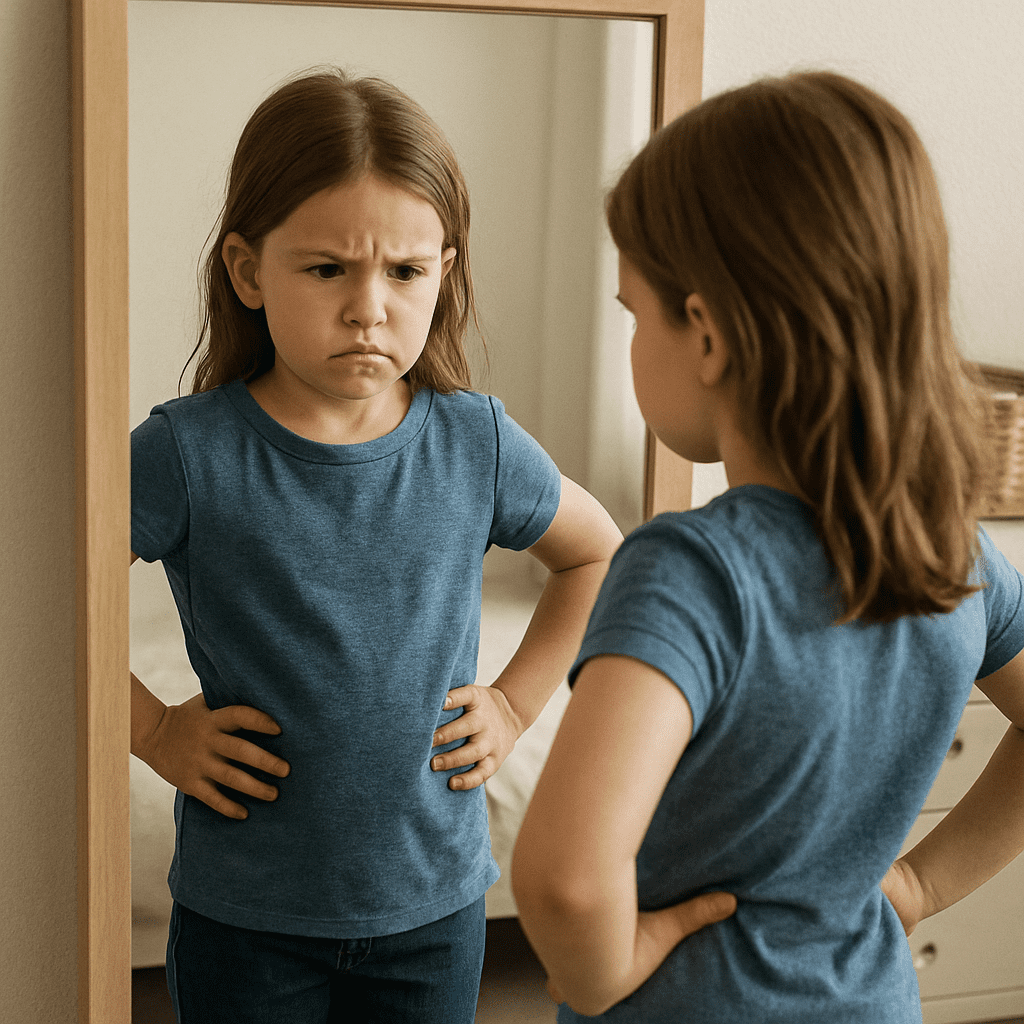
Imagine this scene: You walk into the bathroom and find your nine-year-old daughter in front of the mirror. Instead of simply washing the dirt off her face after playing outside, she is carefully applying an expensive anti-aging cream, followed by a hyaluronic acid serum. When you ask her what she's doing, she replies with complete seriousness, „I have to do something about my first lines.“
What would have sounded like the absurd punchline of a bad joke a few years ago has become a bitter reality in many households today. We are facing a societal development that alarms parents, teachers, and psychologists alike. If elementary school girls are already afraid of getting older, what's going wrong? We urgently need to ask ourselves this question in order to prevent a generation of girls from defining their self-worth solely through a flawless, eternally young appearance.
In this comprehensive guide, we will shed light on the causes of this disturbing trend, analyze the psychological and physical dangers, and present practical solutions on how we can protect and empower our children.
The Rise of „Sephora Kids“: A Trend Out of Control
Anyone walking into a perfumery or cosmetics store today can hardly believe their eyes. Aisles where adult women used to look for moisturizers are increasingly populated by ten-year-olds. They test serums, mix so-called „skincare smoothies,“ and chat knowledgeably about ingredients like peptides and acids.
Sephora Kids Trend Causes
This trend, often referred to online as „Sephora kids“ (named after the well-known cosmetics chain, although it affects all stores), isn't coming out of nowhere. Sephora Kids Trend Causes are multifaceted and deeply rooted in our modern media landscape:
- TikTok and Instagram: Short, highly visual videos from influencers showcase complex, ten-step skincare routines („Get Ready With Me“ or GRWM). These videos are extremely soothing, aesthetically pleasing, and convey a sense of belonging and control.
- Peer Pressure When the coolest girls in class use certain brands, it creates immense pressure to fit in. Skincare has become the ultimate status symbol on the playground.
- The desire to grow up: Children have always wanted to be like adults. They used to secretly try on Mom's lipstick; today, they copy her entire anti-aging routine.
Why are children afraid of wrinkles?
The central, deeper question, however, is: Why are children afraid of wrinkles?At eight or ten years old, the skin has perfect cell renewal. Wrinkles are decades away.
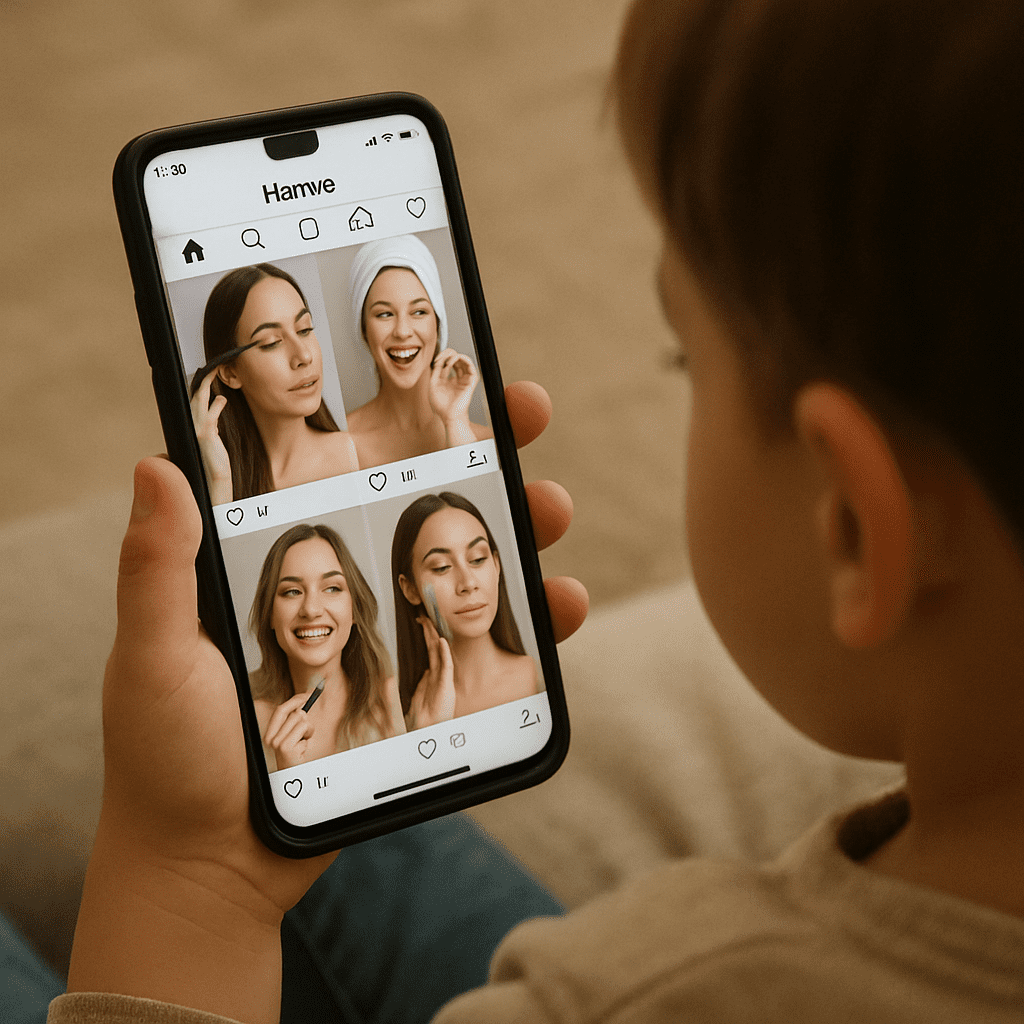
The answer lies in the constant confrontation with filtered perfectionism. Children see faces on their screens that have no pores, no texture, and certainly no lines. Aging processes are almost exclusively portrayed in the media as a „problem,“ „flaw,“ or „illness“ to be „fought.“ When children are presented with this message unfiltered and a thousand times over, they associate aging with loss of control and ugliness.
The Power of Images: Algorithms and the Cosmetics Industry
We can't blame the children. They are the target audience of perfectly orchestrated machines – both technologically and economically.
The influence of social media on self-image
The The influence of social media on self-image is particularly fatal for primary school-aged children, as their identities are just forming. Algorithms are programmed to show us what keeps us on the platform the longest. If a young girl watches one video about „Glowy Skin,“ her feed will inevitably be flooded with content about beauty, makeup, and anti-aging.
This leads to a phenomenon that experts call „norm shifting.“ The child loses their sense of what normal human skin looks like. Due to the constant use of beauty filters that make faces slimmer, noses smaller, and skin poreless, an internal image is created that no longer aligns with the reality in the bathroom mirror. Dissatisfaction is pre-programmed.
Marketing Tricks of the Cosmetics Industry for Children
The cosmetics industry has long recognized the enormous economic potential of „Generation Alpha“ (those born from 2010 onwards). Although many brands claim they are not targeting children, the Marketing Tricks of the Cosmetics Industry for Children another language
- Colorful, playful packaging: Products that look like toys, have bright colors, or smell like ice cream and candy instinctively appeal to children.
- Gamification of skincare Dose tubes that you have to press to make the product come out in a flower shape turn application into a game.
- Collaborations with teen idols: When a favorite pop star or the hottest TikToker holds up a cream to the camera, it becomes a must-have.
Early sexualization through beauty standards
Another dark aspect of this trend is the Early sexualization through beauty standards. When nine-year-old girls learn that their primary value lies in their physical attractiveness and flawlessness, they adopt standards intended for adult women (and often toxic even for them). Playfulness, lightheartedness, and the freedom to „get dirty“ are replaced by constant monitoring of their own appearance. This robs children of valuable time and mental energy that they would need for their cognitive and social development.
Skincare Facts: What Young Skin Does (and Doesn't) Need
In addition to the psychological aspects, we urgently need to look at the physical consequences of this trend. Children's skin is fundamentally different in structure from adult skin. It is thinner, more permeable, and has an intact, sensitive skin barrier that regulates itself.
Child-friendly skincare vs. anti-aging products
When parents ask what a Child-friendly skincare vs. anti-aging products What distinguishes it is that the dermatologists' answer is usually refreshingly simple: Less is more.
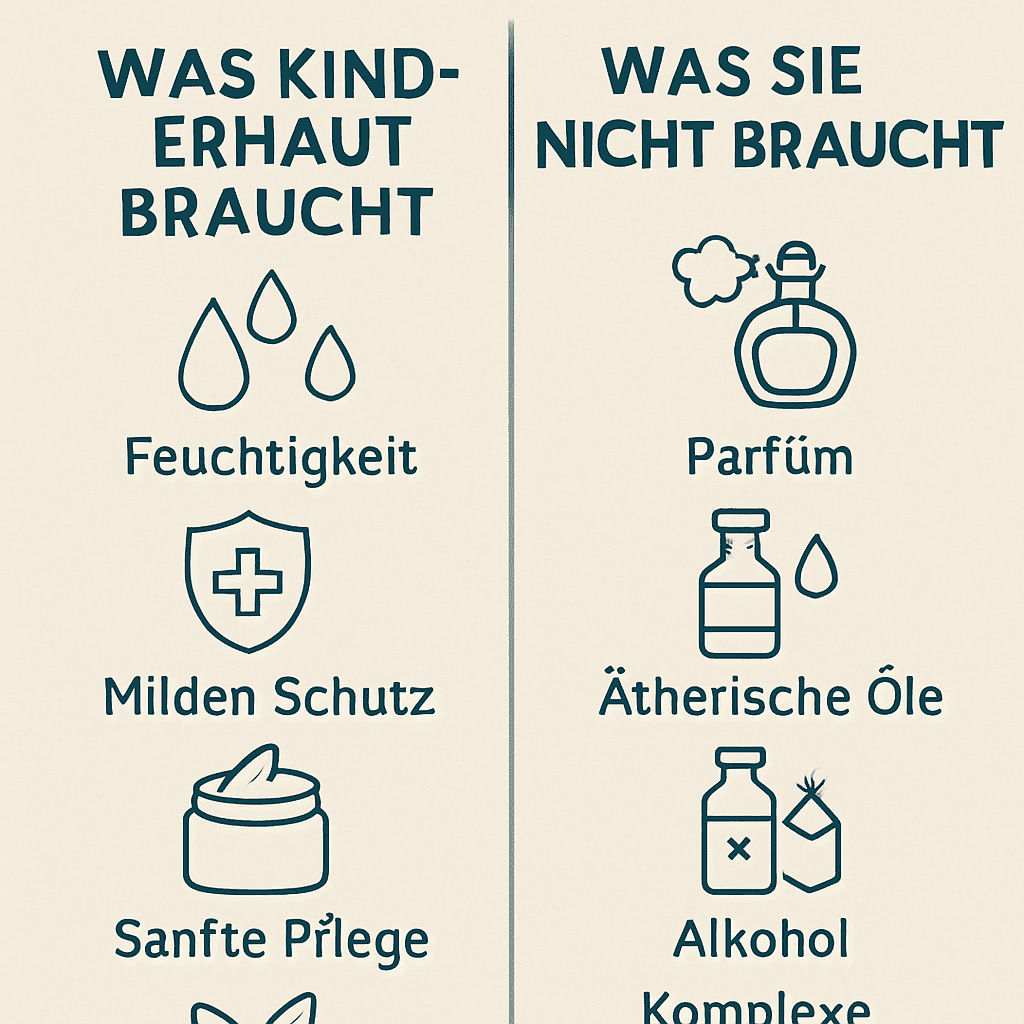
What children's skin needs:
- Water and a mild cleansing foam To remove dirt or sunscreen in the evening.
- Sunscreen The only actual protection for skin health that makes sense at any age (for cancer prevention, not primarily against wrinkles).
- If necessary, a light basic care: Only in winter, when the skin is very dry due to heated air, or for specific skin conditions like neurodermatitis (in consultation with the pediatrician).
What baby skin absolutely DOES NOT need:
- Peeling acids (AHA, BHA)
- Vitamin C-Seren in high concentrations
- Collagen Booster
- Retinol
Dangers of retinol for young skin
Particularly alarming is the use of retinol (vitamin A) by children. Retinol is a highly effective anti-aging ingredient that accelerates skin cell renewal. While this may be desirable for mature skin, Dangers of retinol for young skin are serious.
Since children's cells renew at top speed anyway, retinol acts as an aggressive disruptor here. It destroys the natural skin barrier. The consequences are:
- Severe redness and burns (so-called retinol burns)
- Extreme dryness and flaking
- Increased susceptibility to infections and bacteria
- A massively increased sensitivity to light (risk of sunburn)
Ironically, using anti-aging products in childhood can damage the skin barrier so severely that the skin can age prematurely and develop lifelong sensitivities.
A Glimpse into the Child's Psyche: Psychological Consequences
When we leave the body and turn to the psyche, the true extent of this trend becomes visible. Fear of getting older in elementary school girls is not just a temporary phase, but a symptom of deep insecurity.
Child psychology: Fear and loss of control
In the Child psychology anxiety We often understand anxieties as an expression of a perceived loss of control. The world children grow up in today is complex and often overwhelming. Skincare and beauty routines offer an illusion of control.
„If I apply these five products every evening, I am safe from aging, becoming ugly, and being excluded.“ This is a form of magical thinking. The routine becomes almost an obsession. If one product is missing, real panic sets in. The child fears not only the imaginary wrinkle but also the loss of social acceptance tied to flawlessness.
Psychological consequences of beauty obsession
The Psychological consequences of beauty obsession In early childhood, such things can have a lasting negative impact on a girl's life path. When a child spends hours devising care routines, standing in front of the mirror and analyzing their appearance, other important areas of development are neglected.
Instead of developing hobbies, playing sports, learning musical instruments, or going into nature, all cognitive capacity is focused on the external. In psychology, this is called self-objectification. Girls no longer see themselves as acting, feeling subjects, but as objects to be looked at and evaluated by others (or themselves).
Consequences of unattainable beauty standards
The Consequences of unattainable beauty standards are backed by numerous studies. We are seeing younger and younger girls:
- A dramatic increase in eating disorders (anorexia, bulimia)
- Body Dysmorphic Disorder (an obsessive preoccupation with a perceived physical flaw)
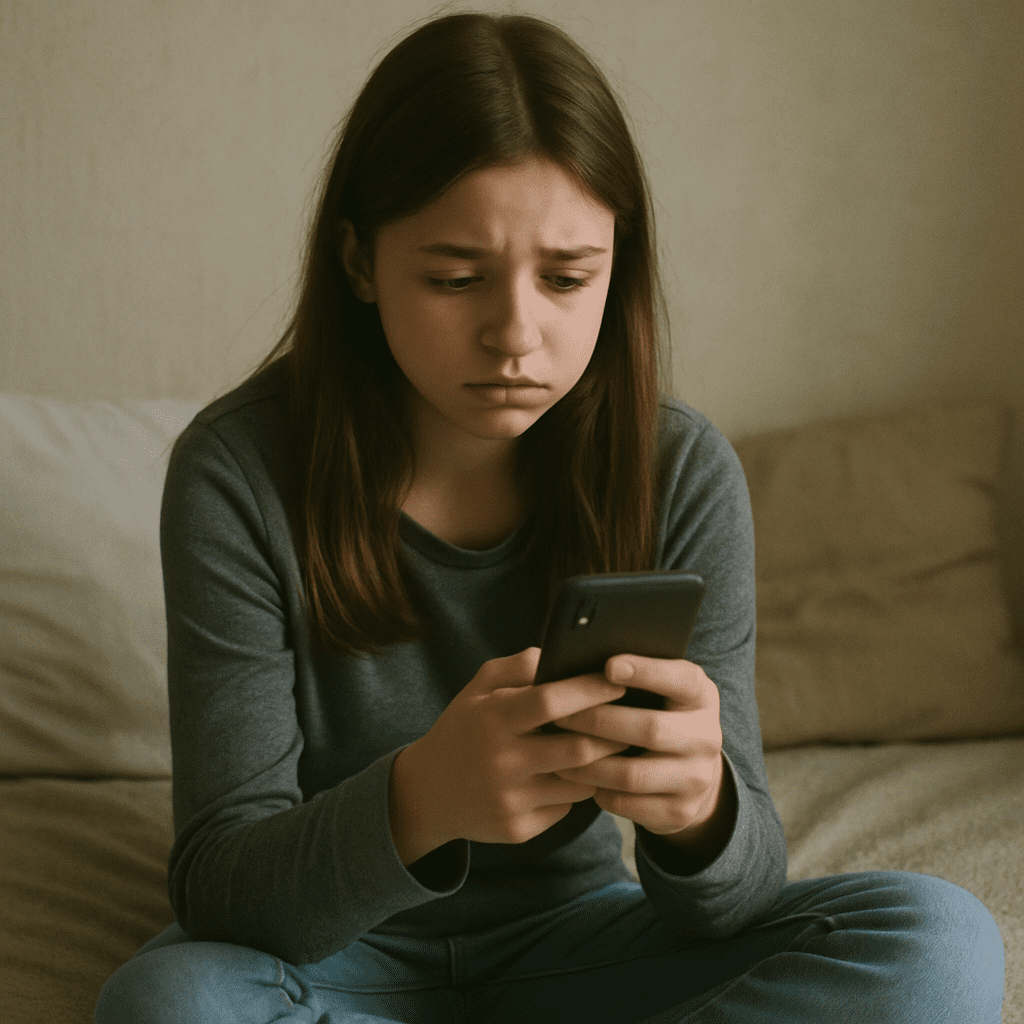
- Depressive moods and social isolation when one doesn't meet their own expectations
- Self-harm as an outlet for enormous inner pressure
Counteracting: How we protect our children
The diagnosis is grim, but we are not helpless against the problem. Parents, educators, and society as a whole can and must act to Stop the anti-aging craze in girls to be able.
Digital Media Literacy in Elementary School
The most important shield against toxic beauty ideals online is education. Digital Media Literacy in Elementary School It should not be limited to how to use a word processor. It urgently needs to include the analysis of social media content.
Practical approaches for parents and schools:
- Exposing filters: Show children concretely how filters work. Take an app and show the „before“ and „after.“ Explain that the people in the videos don't look like that in reality.
- Explaining Sponsorship: Children often don’t realize that influencers are paid. Make it clear: „This woman isn’t saying the cream is good because she really believes it is, but because the company is paying her a lot of money to say so.“
- Seeing through algorithms: Explain to your child in simple terms how TikTok and similar apps work. „The app keeps track of what you watch and shows you more and more of it so you won’t stop scrolling.“
Preventing Body Dissatisfaction in Girls
The Preventing Body Dissatisfaction in Girls starts long before the first cell phone is purchased. It begins with what we value in everyday life.
Praise your child for their qualities, not their appearance. Instead of saying, „You look so pretty in that dress today,“ say:
- „I admire how much you concentrated on this puzzle.“
- „You were so helpful to your brother earlier, I thought that was great.“
- „I love your creativity when you draw.“
If we consistently tie a girl's worth to her abilities, character, and effort, we remove the breeding ground for the beauty obsession.
Strengthening self-esteem in elementary school children
To Strengthening self-esteem in elementary school children To be able to, we must enable them to have successes away from the mirror.
- Sports and Exercise When girls learn about their bodies provide can (run fast, climb high, dance), instead of just paying attention to how he looks like, develops a healthy body awareness.
- Ask critical questions: If your daughter comes to you wanting an anti-aging serum, don't just flat-out forbid it, but start a dialogue. Ask, „What do you think this product does? Why is this so important to you? Who told you about it?“ Often, simply voicing her fears can alleviate some of the tension.
- Establish common rules for cosmetics: Set clear but loving boundaries. „We don’t buy products with retinol or acids because they’re harsh on your skin. If you’d like to have a skincare routine, we’ll go shopping together for a gentle foaming cleanser and a mild moisturizer.“
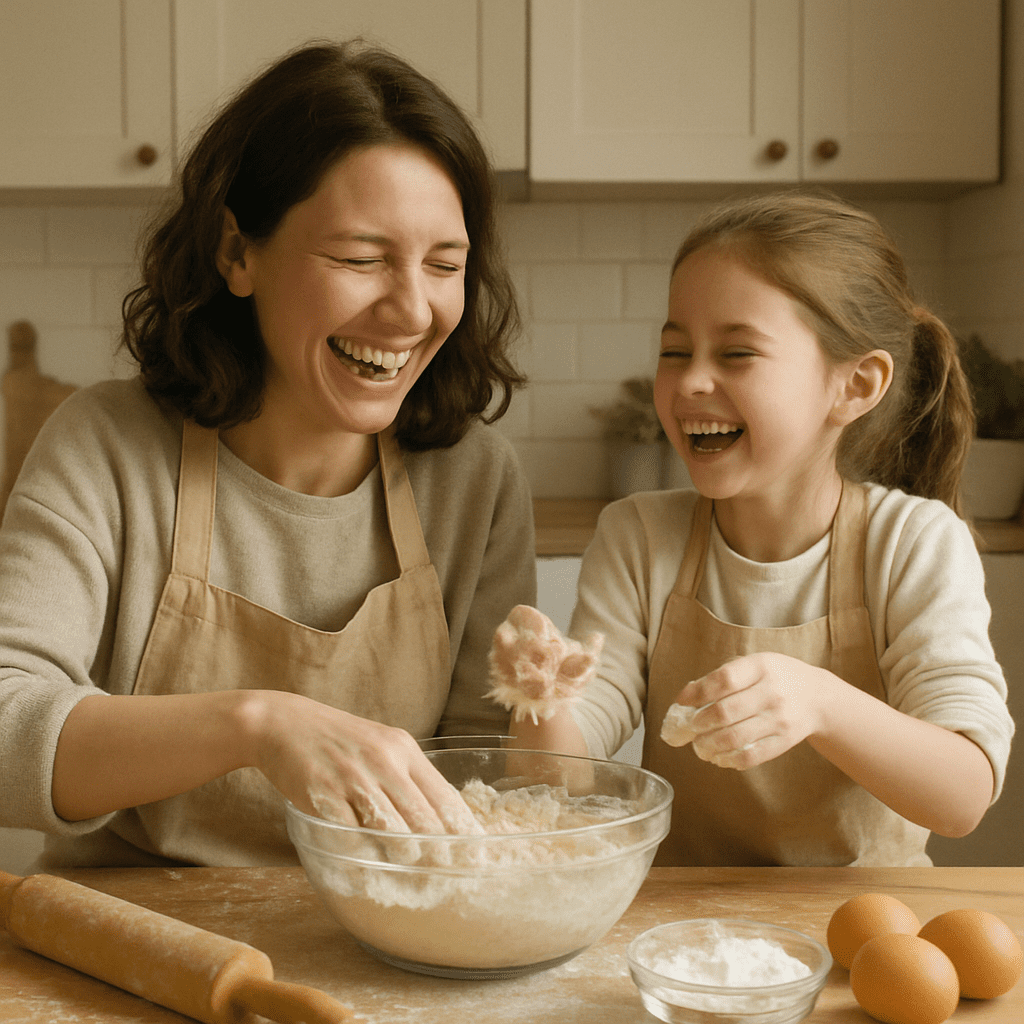
The most important lever: We adults as role models
No matter how often we explain to our children that filters aren't real, if we stand in front of the mirror complaining about our „terrible wrinkles,“ we undo all our efforts.
The Role of Parents in Body Acceptance
The The Role of Parents in Body Acceptance – especially that of mothers – can never be overestimated. Children are excellent observers and terrible listeners. They imitate what we do, not what we say.
Watch your own language when you speak about yourself or other women:
- Don't comment on other people's weight or appearance without being asked (not even on celebrities on TV).
- Avoid so-called „fat talk“ or „age talk“ in front of your children („I look so old today,“ „I can't eat this piece of cake, or I'll get fat“).
- Celebrate your own personal care as an act of self-care, not as an anti-aging repair job. Say, „I'm applying lotion because my skin feels dry,“ not, „I need this lotion to iron out my wrinkles.“
How do I explain aging to children positively?
Perhaps the most challenging task is to reverse the narrative of our society. How to explain aging to children positively in a world that idolizes youth?
Use metaphors and life experience:
- The Book of Life: Think of wrinkles as the pages of a book. „Every laugh line shows how often this person has been happy in their life. A face without wrinkles is like an empty book—it doesn’t have a story to tell yet.“
- The Focus on Growth: Aging doesn't mean decay, but growth. Show what one can learn and do as they get older. „The older you get, the more you understand the world, the more you can make your own decisions.“
- Lead by example: Respect for the elderly Maintain contact with older generations (grandparents, elderly neighbors). When children experience old people as humorous, wise, loving, and active, old age loses its terror. Show that a person's value does not decrease with age, but grows through experience.
A societal turning point
When nine-year-old girls stand in perfume shops desperately trying to stop the natural passage of time with chemical acids, it's no longer a harmless trend. It's a loud wake-up call.
Something is going terribly wrong when capitalism and unregulated algorithms exploit our children's deepest insecurities. We cannot shift the responsibility for this onto the children. They are simply reacting to a world that we adults have created.
What we need to do now: We need to turn the tables. It is up to us parents, guardians, teachers, and also politicians (through stricter regulations for advertising targeting children on social media) to build a protective wall.
We need to teach our girls that their skin is there to protect them from the environment, ward off bacteria, and allow them to feel the sun on their faces. Their skin is not an ornament that must be kept flawless for the gaze of others.
If we start to consistently define our children’s worth apart from beauty standards, encourage their digital literacy, and serve as healthy role models for body acceptance, we can break this toxic cycle.
Let's not let an entire generation of girls lose their carefree childhood to the fear of imaginary wrinkles. A face in elementary school doesn't need anti-aging cream – it needs fresh air, the occasional little scrape from climbing on the playground, and an environment that makes it feel every day: You are exactly right, just the way you are.