
Many parents are familiar with the daily dinner table discussion: attentively prepared broccoli is met with a critical gaze, carrots are pushed to the side of the plate, and in the end, only pasta is requested. In such moments, mothers and fathers often ask themselves with concern: How much fruit and vegetables should my child eat?
A balanced diet is the cornerstone of healthy growth, a strong immune system, and the cognitive development of our offspring. However, there is often a wide gap between theoretical nutritional recommendations and the practical reality at the family table. In this comprehensive guide, you will learn not only the exact nutritional needs for different age groups but also how to integrate these amounts stress-free and deliciously into family life.

The Basics: Why Fruits and Vegetables Are So Important for Kids
Before we talk about specific quantities, it's important to understand why plant-based foods play such a central role. Fruits and vegetables are true nutrient powerhouses and provide building blocks that a child's body cannot produce on its own.
Essential Vitamins for Childhood Development
The child's organism is in a constant state of development. Cells divide, bones grow, the brain forms connections. All these processes require Vitamins essential for childhood development needed.
- Vitamin C A powerful antioxidant that not only strengthens the immune system but also improves iron absorption from plant-based sources (like oatmeal or lentils). Bell peppers, broccoli, and citrus fruits are excellent suppliers.
- Vitamin A (Beta-Carotene): Essential for vision and skin health. Carrots, sweet potatoes, and spinach should therefore be regular components of your diet.
- B Vitamins (especially folic acid): Important for blood formation and cell division. Green leafy vegetables, peas, and beetroot are the best sources for this.
- Vitamin K Essential for blood clotting and bone metabolism. It is found abundantly in kale, Brussels sprouts, and chives.
Fiber for healthy digestion
In addition to vitamins and minerals, dietary fiber provides another essential nutrient. High-fiber foods for children ensure regular digestion and prevent constipation, a common problem in early childhood. Furthermore, fiber serves as „food“ for good gut bacteria (the microbiome). A healthy microbiome is today closely linked in science with a strong immune system and even with mental balance. Apples (with skin!), berries, pears, but also carrots, kohlrabi, and legumes are excellent sources of fiber.
The specific need: How much fruit and vegetables should my child eat?
The general recommendation from the German Nutrition Society (DGE) is „5 a day.“ This means: three portions of vegetables and two portions of fruit. But what exactly is a portion for a child?
The Simple Formula: The Handful Rule Children's Nutrition
Since children's hands grow with their bodies, the portion size also grows automatically. Handful of Rules for Children's Nutrition is a brilliant and practical method for measuring portions without a kitchen scale:
- A portion is what fits into the hollow of a child's hand.
- For small fruits/vegetables (e.g., berries, peas, cherry tomatoes), the child's two hands together form a bowl – that's one serving.
- The goal is 5 of these kid-sized handful portions daily (3x vegetables, 2x fruit).
Daily vegetable needs for children by age
To give you an even more precise idea, a look at the Daily vegetable needs for children by age, measured in grams. These values are intended as a guide and do not need to be met to the exact gram every day.
Toddlers (1 to 3 years old):
- Vegetables approx. 100 to 120 grams per day.
- Fruit approx. 100 to 120 grams per day.
- Tip: At this age, appetite fluctuates enormously. A day where only pasta is eaten is normal, as long as more fresh food ends up on the plate during the rest of the week.
Preschoolers (4 to 6 years old):
- Vegetables approx. 150 to 200 grams per day.
- Fruit approx. 150 to 200 grams per day.
School children (7 to 9 years old):
- Vegetables approx. 220 to 250 grams per day.
- Fruit approx. 200 to 220 grams per day.
Older children and adolescents (ages 10 and up):
- Here we approach adult values.
- Vegetables Approx. 300 to 400 grams per day.
- Fruit approx. 250 to 300 grams per day.
The Optimix Nutrition Plan for Toddlers
If you are unsure how to translate these quantities into meals, the Research Institute of Child Nutrition (FKE) offers a scientifically based guide: the Optimix Toddler Nutrition Plan (Optimized Mixed Diet). This plan recommends plenty of plant-based foods, moderate amounts of animal products, and sparing consumption of foods rich in fat and sugar. Fruits and vegetables form the strong foundation of daily food intake in this concept and should be offered at every main and intermediate meal.
Fruits vs. Vegetables: Finding the Right Balance
Fruit is significantly more popular with most children than vegetables. The natural sweetness appeals to the innate infantile sense of taste (sweet signals „non-toxic and energy-rich“ in nature). But can a child also eat too much fruit?
The problem: Too much fruit sugar in children
While fruit contains many valuable vitamins, it largely consists of fructose (fruit sugar). Too much fruit sugar in children can strain the metabolism, as fructose is almost exclusively broken down in the liver. Large quantities (especially in the form of smoothies or juices, where the feeling of fullness is absent due to the lack of chewing) can contribute to the development of non-alcoholic fatty liver disease in the long term and promote overweight. Children's teeth also suffer from the constant acid and sugar load.
Therefore, the rule is: Two portions of fruit a day are completely sufficient and very healthy. The remaining three portions of the „5 a day“ rule must consist of vegetables.
Is juice spritzer a sensible substitute for fruit?
Parents keep asking: Is Fruit juice spritzer as a substitute for fruit makes senseThe clear answer from pediatricians and nutrition experts is: No, not as a regular substitute. When juice is pressed, the important fiber from the whole fruit is lost. This allows the fruit sugar to enter the bloodstream in isolation and much faster, leading to blood sugar spikes. Furthermore, a child drinks a glass of apple juice (for which about three to four apples were pressed) in a few minutes – a child would never eat that many whole apples in one sitting. Whole fruit is always preferable to juice due to satiety and dental health (chewing promotes saliva flow). Juice spritzers should be seen more as an occasional treat rather than a thirst quencher or fruit substitute.
Which fruits are the healthiest for children?
If you are wondering, Which fruits are healthiest for children, the answer is: Variety is the spice of life. Nevertheless, there are absolute superstars among fruits:
- Berries (raspberries, blueberries, strawberries): They are extremely low in sugar but packed with antioxidants and fiber.
- Apples and pears: Good for digestion and chewing strengthens the jaw muscles.
- Watermelon Ideal in the summer for staying hydrated (consists of over 90% water).
- In moderation Bananas and grapes. They are excellent energy sources for active children, but they also contain a particularly high amount of fruit sugar.
Quality and Preparation: How Nutrients are Preserved
It's not just about what's on the plate, but also how it was prepared. Valuable ingredients are often lost on the way from the field to the child's mouth.
Frozen Vegetables vs. Fresh Vegetables Nutritional Value
A widespread myth states that only fresh vegetables are truly healthy. However, if we Frozen Vegetables vs. Fresh Vegetables Nutritional Value When you compare them, a different picture often emerges. Fresh vegetables sometimes sit on supermarket shelves for days and then in the fridge at home. Light, oxygen, and heat cause vitamins to break down steadily. Spinach, for example, loses up to 80% of its vitamin C content after two days at room temperature.
Frozen vegetables (without additives like cream or spices) are mostly flash-frozen a few hours after harvesting. This immediately stops nutrient degradation. Frozen peas, frozen broccoli, or frozen berries are a fantastic, time-saving, and extremely nutrient-rich product for families that should always be kept in stock.
Nutrient-preserving preparation of vegetables
So that the vitamins from the vegetables really reach the child, it is important nutritional value-preserving preparation of vegetables essential.
- Don't overcook Long cooking times in plenty of water leach out water-soluble vitamins (like vitamin C and B vitamins). The vegetables become mushy and colorless – no wonder children reject them then.
- Steaming and simmering Use a steamer insert for your pot. The vegetables cook solely in hot steam, remaining crisp, retaining their vibrant color, and nearly all their vitamins.
- Raw food Many vegetables like bell peppers, cucumbers, or carrots can be wonderfully munched on raw.
- A drop of oil Fat-soluble vitamins (E, D, K, A – easy to remember as EDEKA) can only be absorbed by the body when fat is consumed at the same time. Therefore, always add a few drops of high-quality rapeseed, olive, or flaxseed oil to your vegetables.
The Color Palette of Nature: The Rainbow Food Principle for Kids
Nutritionists repeatedly emphasize the importance of variety. A playful way to incorporate this variety into everyday life is the Rainbow Eating Principle for Kids.
The colors of plants come from so-called secondary plant compounds (phytochemicals), which each offer very specific health benefits:
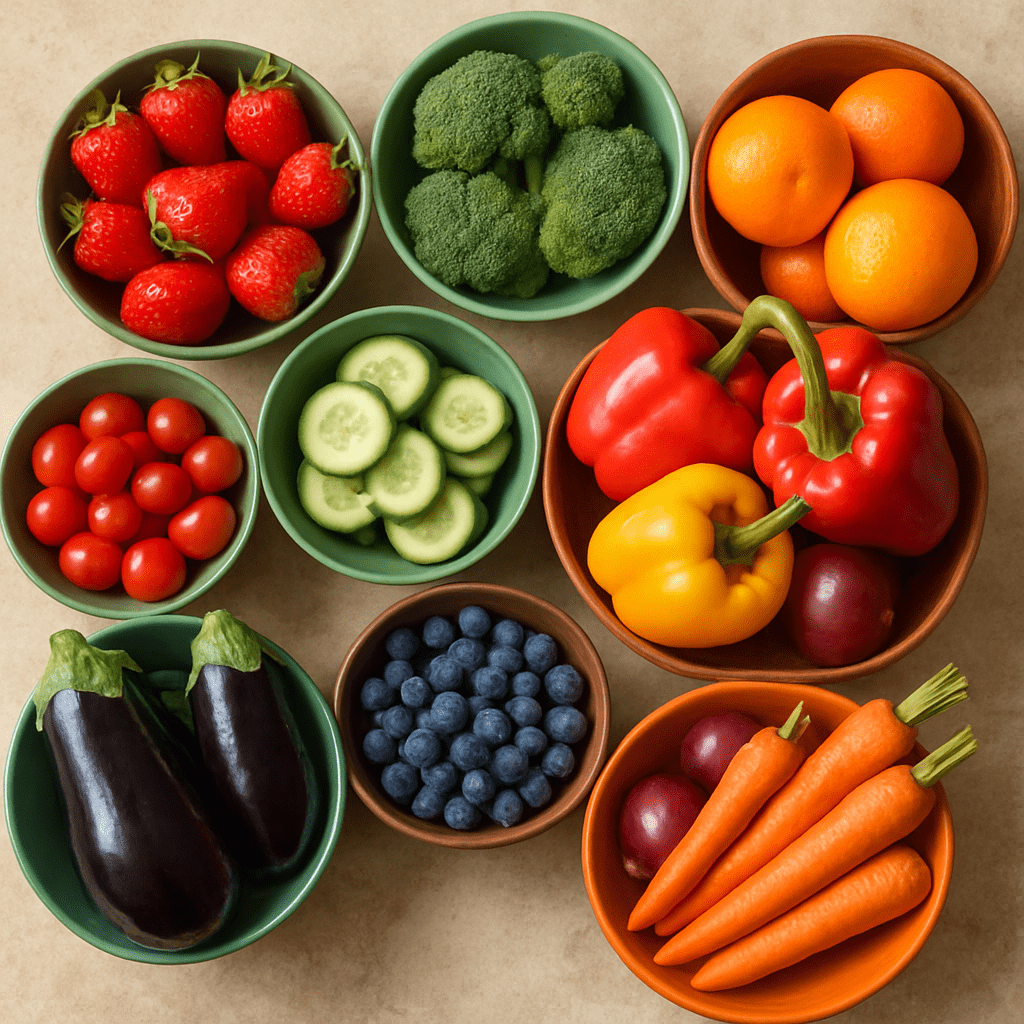
- Red (tomatoes, red bell peppers, strawberries): Contains lycopene, which has anti-inflammatory effects and protects cells.
- Orange/Yellow (Carrots, Sweet Potatoes, Peaches): Beta-carotene provides healthy eyes and a strong immune system.
- Green (broccoli, spinach, peas, kiwis): They are rich in folic acid, iron, and calcium.
- Blue/Purple (blueberries, eggplants, red cabbage): Anthocyanins, which can support brain function.
- White (Cauliflower, Onions, Mushrooms): Contain allicin and quercetin, which boost the body's defenses.
How to implement it Make a game out of food! „Did we eat anything red today? What green vegetable do we want to try tonight to complete our rainbow?“ Games like these spark children's curiosity and take the pressure off the topic of nutrition.
Sustainable, affordable, and delicious: Shopping seasonally
When fruits and vegetables have to be transported for hours on an airplane or grown in heated greenhouses, not only the environment suffers, but often the taste as well. Seasonal Fruit and Vegetable List for Families helps you shop diversely and affordably. Seasonally harvested vegetables were allowed to ripen in the sun and naturally taste more aromatic, which significantly increases their acceptance by children.
Here's a quick overview for your shopping list:
- Spring Radishes, spinach, kohlrabi, asparagus, early strawberries, and rhubarb.
- Summer Tomatoes, cucumbers, zucchini, bell peppers, berries of all kinds, cherries, apricots, melons.
- Autumn Pumpkin, parsnips, corn, apples, pears, plums, grapes.
- Winter Carrots, beets, Brussels sprouts, kale, lamb's lettuce, storage apples. (Citrus fruits are now in season in Southern Europe).
Tip for families: Hang a colorful seasonal calendar in the kitchen. This way, children can learn that strawberries aren't naturally available in December, and the anticipation for summer flavors grows.
Challenge at the dining table: Child refuses vegetables – what to do?
It's the nightmare of many parents: you stand in the kitchen for hours, conjuring up a healthy meal, and the child presses their lips together. Child refuses vegetables, what to do? First of all: Take a deep breath! You are not alone in this.
Almost all children go through the phase of the so-called between the ages of 2 and 6. Neophobia (Fear of the new). From an evolutionary biology perspective, this was a protective mechanism: when small children began to move independently, this skepticism towards unfamiliar greens prevented them from eating poisonous berries or leaves.
Proven Strategies for Picky Vegetable Eaters
To get through this phase relaxed, the following will help Strategies for picky eaters:
- Serve as a role model Children don't preach, they imitate. If you push vegetables aside with a grimace, your child won't eat them either. Enjoy fruits and vegetables visibly and with pleasure.
- No pressure and no rewards: „If you eat your broccoli, you'll get ice cream“ diminishes the vegetable („broccoli is the punishment, ice cream is the reward“). Offer the vegetable neutrally. The child decides whether and how much they eat.
- Regular exposure A child often needs to try a new food 10 to 15 times with an open mind (or at least see it on their plate) before they accept the taste. Don't give up after the third try!
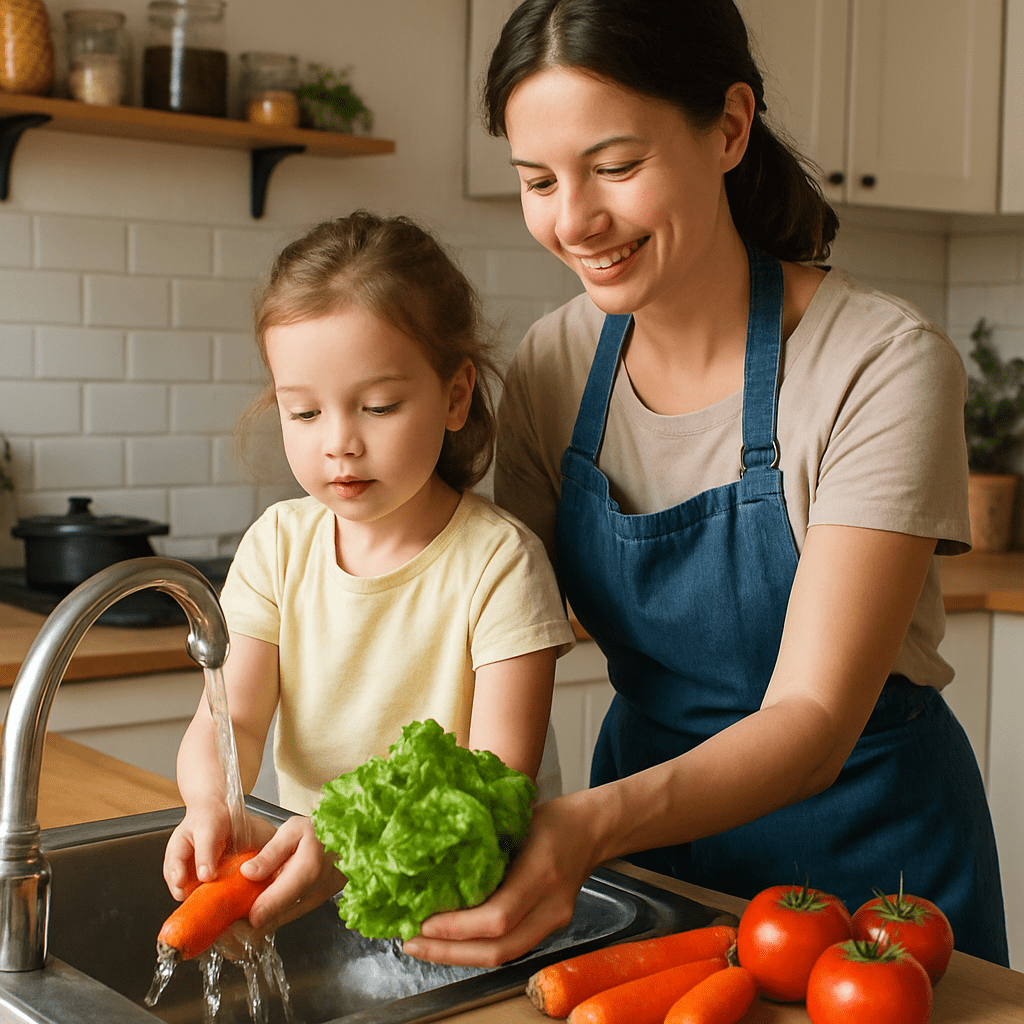
- Involve when cooking: Children who are allowed to help with washing, cutting (with a safe child's knife), or stirring are usually much prouder of „their“ food and are more likely to try it.
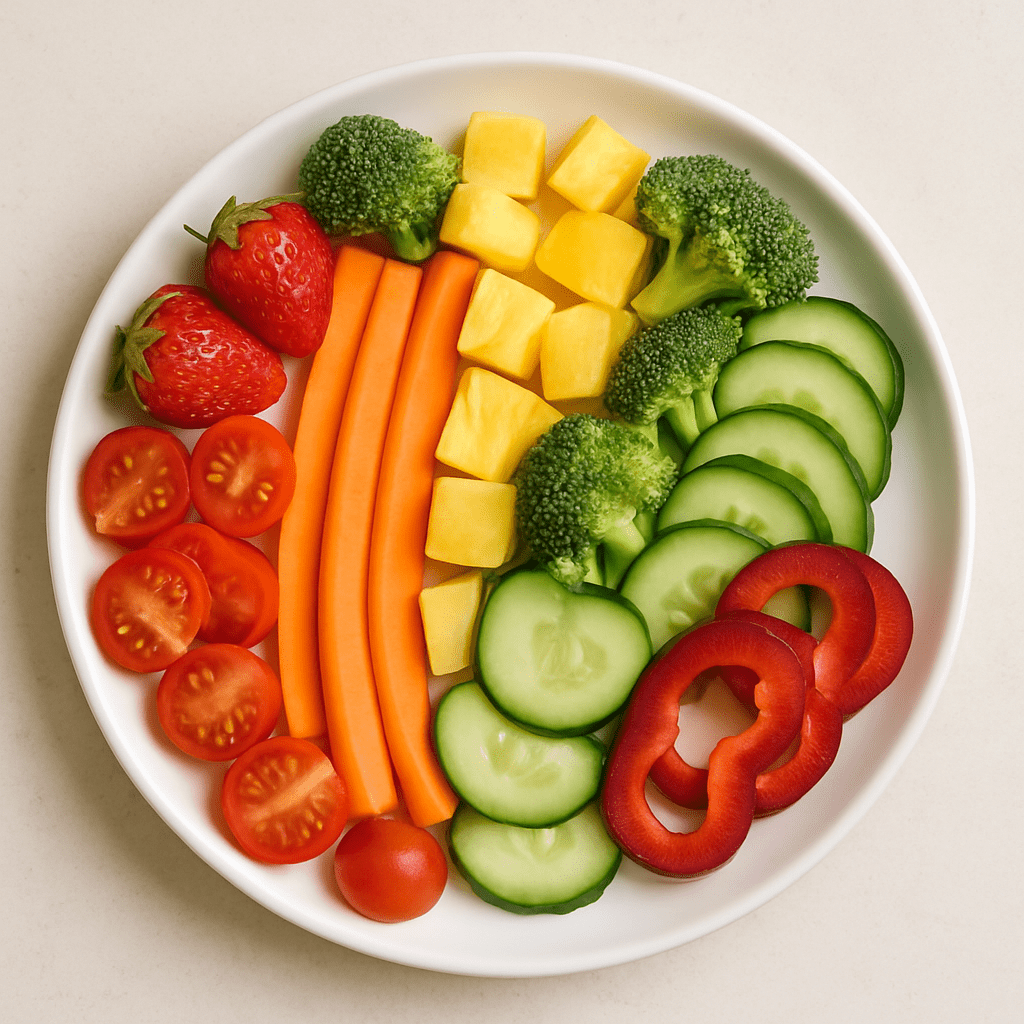
- Crisp, not mushy: Children often hate the texture of cooked vegetables. Raw vegetable sticks (cucumber, carrot, bell pepper) are eaten much more readily.
- Offer dips: A dollop of herb quark, hummus, or even a little sugar-free ketchup can work wonders. Dipping is fun and initially masks unfamiliar flavors.
The Secret Way: Hiding Vegetables in Kids' Food?
Is it legitimate, Hiding vegetables in children's food to want? Opinions of educators and nutritionists diverge here.
The advantages: It acutely secures nutrient supply. If you puree carrots and celery extremely finely and mix them into your favorite tomato sauce, your child eats vitamins without noticing. Zucchini can be wonderfully baked into waffle batter or chocolate muffins (which also makes them extremely moist).
The disadvantages: The child isn't learning to accept and like vegetables in their original form. If the deception is discovered, it can lead to a loss of trust („Mom is secretly mixing things into my food!“).
The Golden Mean: Do both! Feel free to sneak in some extra vegetables into the bolognese sauce or meatballs to secretly boost the meal's nutritional value. But also offer visible vegetables with the same meal, for example in the form of a few cucumber slices as a side. Feel free to tell your child: „By the way, there's a magic carrot in this sauce that makes it so deliciously sweet!“ This way, they associate hiding it with a positive connection.

Practical Implementation: Healthy Snacks and Recipes
Everyday life with children is often stressful. Nevertheless, it's easier than you might think, Fruits and vegetables for children evenly throughout the day. Often, the way it's presented is the deciding factor. A whole apple is often ignored in a school backpack; the same apple, cut into bite-sized wedges and sprinkled with a splash of lemon (to prevent Browning), is suddenly in high demand during break time.
Clever ideas for healthy snacks
Children have small stomachs and need energy boosts between main meals. Here are creative ideas for Healthy Snacks:
- Apple donuts Cut an apple into thick slices, removing the core in the center with a round cookie cutter. Spread the „donuts“ with some peanut butter and sprinkle with a few blueberries or oats.
- Vegetable fries Cut kohlrabi, carrots, and cucumbers into fries and arrange them upright in a glass. Serve with a dip made from natural yogurt and herbs.
- Fruit skewers: Thread colorful fruit cubes (e.g., melon, kiwi, grapes) onto skewers. Eating food off a skewer is fun for every child.
- Banana Penguins: Dip half bananas into slightly unsweetened dark chocolate and decorate with small candy eyes to make penguins. Perfect for kids' birthdays!
Family-Friendly Vegetable Recipes for Everyday
The best Vegetable Recipes are those that the whole family will enjoy and can be prepared without hours in the kitchen.
1. The „Mysterious“ Tomato Sauce (The Classic)Ingredients: Canned tomatoes, 1 onion, 2 carrots, 1 small zucchini, 1 red bell pepper, garlic, Italian herbs, some olive oil. Preparation: Dice all the vegetables into small cubes and sauté them in olive oil until soft. Add the strained tomatoes and herbs and let everything simmer for about 20 minutes. Then, purée very finely with an immersion blender. The sauce has a slightly sweet taste (from the carrots) and pairs perfectly with whole wheat pasta.
2. Colorful Vegetable Muffins (Ideal for on-the-go)Ingredients: 200g spelt flour, 2 eggs, 100ml milk, 50ml oil, 1 tsp baking powder, 1 grated carrot, 1/2 grated zucchini (squeeze out the water well beforehand!), 50g grated cheese, salt, pepper. Preparation: Mix flour, baking powder, eggs, milk, and oil into a batter. Fold in the grated vegetables and cheese. Fill the batter into muffin tins and bake at 180 degrees Celsius convection for about 20-25 minutes until golden brown. Delicious warm or cold!
3. Cauliflower Pizza (For Cheese Lovers)Dough Ingredients: 1 small head cauliflower, 1 egg, 100g shredded mozzarella. Preparation: Finely chop the cauliflower in a blender until it resembles rice and steam it briefly until tender. Let it cool, then squeeze out all the water using a clean kitchen towel (this step is crucial, otherwise the pizza will be mushy). Mix the dry cauliflower "semolina" with the egg and cheese, then spread it out thinly like a flatbread on a baking sheet. Pre-bake at 200 degrees Celsius (400 degrees Fahrenheit) for 15 minutes. Afterwards, top it like a regular pizza with tomato sauce, vegetables, and a little cheese, then bake for another 10 minutes.
4. Oven-Baked Sweet Potato Wedges Baked sweet potato fries are a brilliant alternative to fried ones. Cut sweet potatoes into wedges, toss with a little olive oil, a pinch of paprika, and salt. Bake on a baking sheet (don't overcrowd) at 400 degrees Fahrenheit for about 25 minutes until crispy. Sweet potatoes provide an extremely high amount of beta-carotene and immediately win over most children with their slightly sweet taste.
Routine over Perfection
In conclusion, a child's diet is not a sprint, but a marathon. You don't have to be perfect every day and weigh out exactly five child-sized handfuls of fresh organic vegetables every evening. There will be days when your child feels like they are only eating dry pasta and rice cakes. That's no reason to worry.
Don't look at the individual day, but take stock over an entire week. Consistently offer fruits and vegetables, but without pressure. Leave raw food plates on the coffee table during playtime in a completely „random“ manner, use the colorful rainbow principle, and celebrate shared family meals.
When you model eating healthy fruits and vegetables as a normal, relaxed, and tasty part of family life, your child will adopt these habits sooner or later. With a smart combination of fresh ingredients and high-quality frozen vegetables, clever recipes, and a healthy dose of parental composure, you lay the best foundation for your child's lifelong health.