
If you're a new parent, you probably know this all too well: You're standing by the crib at night, leaning over your child, and listening intently to every tiny breath. Worrying about the well-being of your new family member is completely normal. One of the topics that occupies parents the most is Sudden Infant Death Syndrome, or SIDS.
The good news is: SIDS has become very rare nowadays. Through targeted education and simple, yet highly effective preventive measures, the rate has drastically decreased in recent decades. Under the central guiding principle Safe Baby Sleep: How to Reduce the Risk of SIDS Midwives, pediatricians, and sleep researchers have developed clear recommendations that you can easily implement at home.
In this comprehensive guide, you'll learn everything you need to know to provide your baby with a safe and healthy sleep environment.
What is SIDS and why is education so important?
Sudden infant death syndrome refers to the unexpected death of an otherwise healthy baby during sleep, with no clear medical cause to be found afterward. Although the exact causes have not been fully understood to this day, science has clear SIDS Risk Factors Identified. These include, among others, stomach sleeping, overheating, an unsafe sleep environment, and smoking near the child.
Once we know these factors, the SIDS Prevention tangible. It's not about living in constant fear, but about creating a secure foundation through sound knowledge. A consistent SIDS Prevention starts even before birth and continues throughout your child's entire first year of life.
Setting up the ideal sleeping space for newborns
Where and on what your baby sleeps has a huge impact on their safety. Setting up the ideal sleeping space for newborns doesn't require much effort at all, but rather the courage for minimalism.
The bedside crib in the parents' bedroom
In the first six to twelve months of life, your baby sleeps most safely in their own crib, but in the same room as you. The parents' breathing sounds act as a gentle pacemaker for the baby, preventing them from falling into too deep, potentially dangerous sleep.
If you are a Setting up a bedside crib correctly in the parents' bedroom If you wish to use one, ensure it is securely attached to the parents' bed. There must be no gap into which the baby could slide. The co-sleeper's mattress should also be at exactly the same height as the parents' mattress, or separated by a solid railing if the heights do not match.
The right substrate
A soft hollow may seem cozy to us adults, but it is life-threatening for babies. If you have a Find a breathable mattress for babies When choosing, pay attention to the firmness level. The mattress needs to be relatively firm. The baby should sink in a maximum of two centimeters so that their head is not enclosed if they happen to turn over. Air channels in the mattress core ensure good circulation and prevent heat buildup.

The Golden Rule: Back sleeping as the safest sleep position
One of the most important milestones in reducing SIDS cases was the safe sleep position educational campaign. Today, the global recommendation is: The Back sleeping as the safest sleeping position is not negotiable. When lying on their back, airways remain clear and the infant's waking reflex functions best.
Many parents wonder: When can a baby sleep on their stomach? The answer is: During the day, when the baby is awake and you are actively by their side (so-called „tummy time“). This time spent on their stomach is extremely important for strengthening neck and back muscles. However, as soon as the baby is sleeping – whether at night or during naps – they must be placed on their back. Even if your baby eventually learns to roll onto their stomach independently during the first year of life, you should still gently roll them back onto their back initially. Once they can fluidly roll in both directions, they will find their own safe sleeping position.
Sleeping bag instead of blanket: Safety first
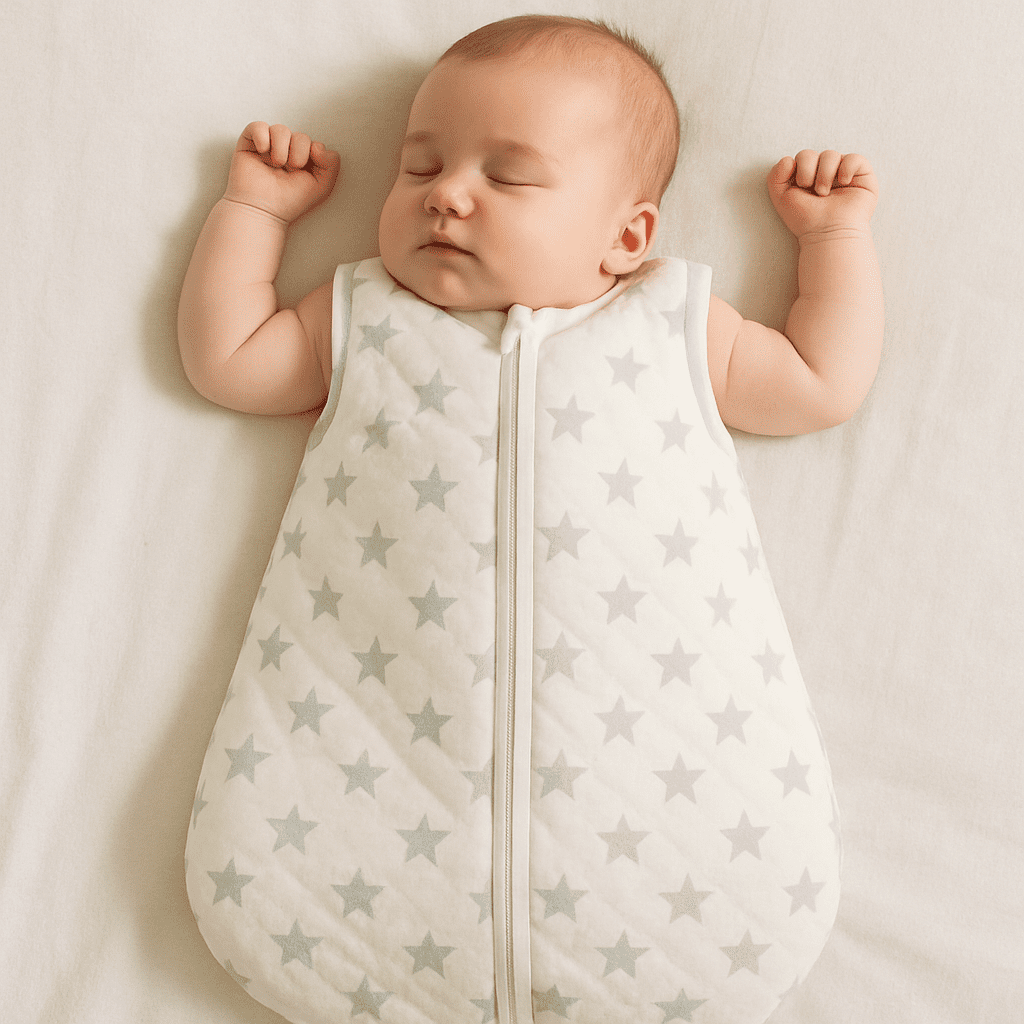
When it comes to the question Baby sleeping bag vs. blanket safety Experts are in complete agreement: Blankets do not belong in a baby's crib. A blanket can easily slide over the infant's face, leading to overheating or even suffocation. Babies cannot push blankets away themselves. A well-fitting baby sleep sack is the only safe solution.
Pay attention to these essential Safety features when buying baby sleeping bags:
- The right size The neckline should not be so large that the baby's head can slip through. At the same time, it should not constrict the neck. (Rule of thumb: One finger should fit comfortably between the neck and the sleeping bag).
- Suitable TOG value: The TOG rating indicates the thermal performance of the sleeping bag. Choose it according to the season and room temperature.
- Waiving ribbons and hoods: A safe sleeping bag has no cords, ribbons, or hoods that could get caught around the neck.
Free breathing in the crib: Less is more
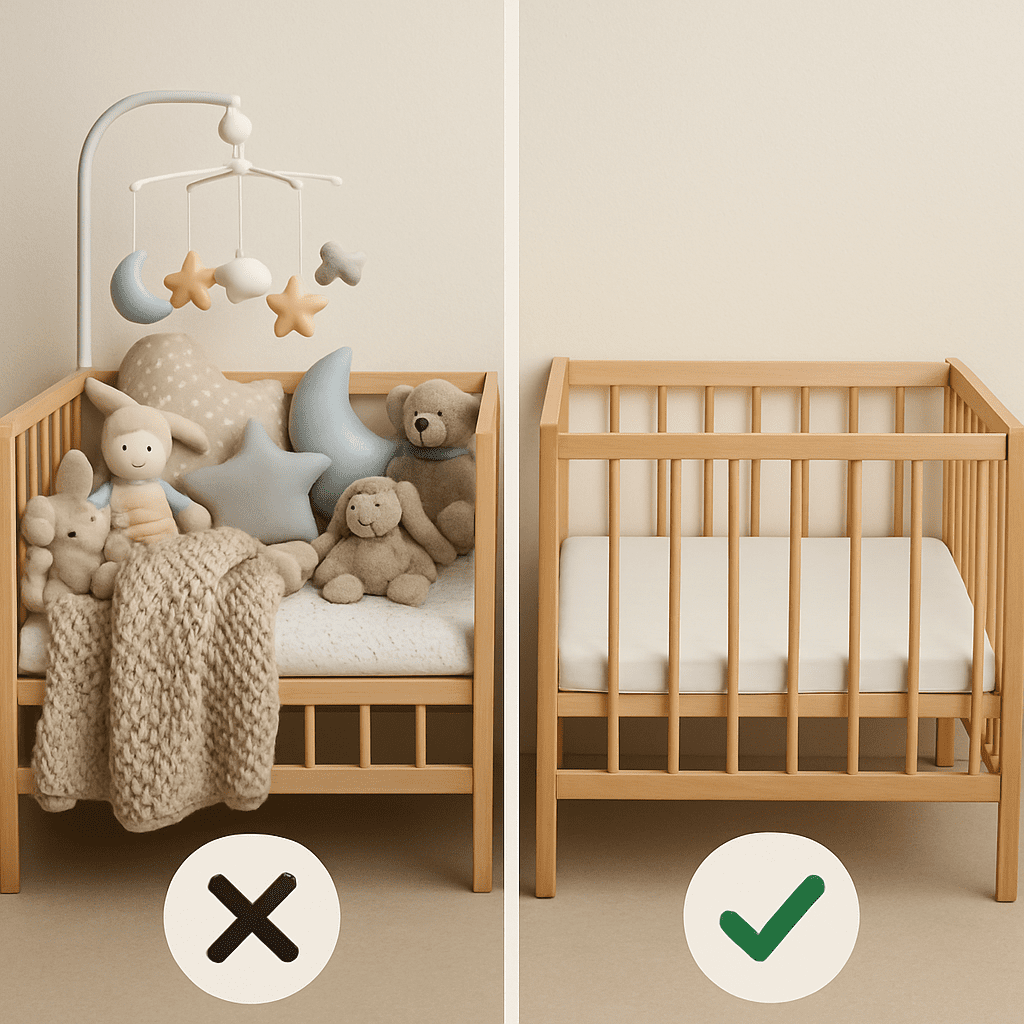
You might have seen beautifully decorated cribs on social media or in furniture stores: stuffed animals in every corner, thick pillows, and fluffy bumpers. However, for your child's safety, this is a nightmare.
Why no crib bumpers in the baby's crib should be attached, has a simple physical reason: they severely obstruct air circulation. The baby breathes in its own stale air (CO2) near the nest. This can lead to a lack of oxygen, one of the main triggers for SIDS. A safe baby bed is empty. No pillows, no stuffed animals, no sheepskins, and no bed bumpers. All the baby needs is a firm mattress, a fitted sheet, and its sleeping bag.
The right sleep climate: Temperature and ventilation
Babies cannot regulate their body temperature optimally on their own during the first few months of life. They overheat much faster than adults, and this overheating is a known risk factor for Sudden Infant Death Syndrome (SIDS).
The Optimal room temperature for infants At night, it's a cool 16 to 18 degrees Celsius. What often feels cool to us adults is just right for the baby. The room should be well ventilated before bedtime.
It is essentially important to have a Prevent overheating in a sleeping baby to be able to. Don't rely on cold hands or feet – these are normal for babies and not an indicator that they are cold. The best way to check your baby's temperature is the neck test: place two fingers on your child's neck. If it feels warm and dry, everything is fine. If the neck is sweaty or hot, the baby is dressed too warmly and you should remove a layer of clothing. By the way, hats absolutely do not belong in closed rooms or even in bed, as babies mainly release excess heat through their heads.
Further effective sudden infant death syndrome prevention measures
Besides the pure sleeping environment, there are other everyday factors that have a massive impact on your child's safety. When we look at Sudden Infant Death Syndrome Prevention Measures look, focus primarily on three things:
1. A smoke-free environment for newborns
Smoking during pregnancy and after birth drastically increases the risk of SIDS. Nicotine and the numerous toxins in smoke impair the baby's respiratory regulation and arousal center in the brain. Smoke-free environment for newborns is the strongest protective factor that parents can actively control. „Third-hand smoke,“ which adheres to clothing, hair, or furniture, is also harmful to sensitive lungs. Never smoke in your home or car, and wash your hands thoroughly before holding the baby.
2. Breastfeeding as a protective factor against SIDS
Breast milk is not only the best nutrition, it also actively protects. Studies show: Breastfeeding as a protective factor against SIDS lowers the risk by up to 50 percent. Breastfed babies generally wake up more easily from sleep (they have a lower arousal threshold) and are better protected from respiratory infections, which can promote SIDS, by the antibodies in breast milk. Even if you only partially breastfeed, your baby benefits from this protection.
3. The pacifier at bedtime
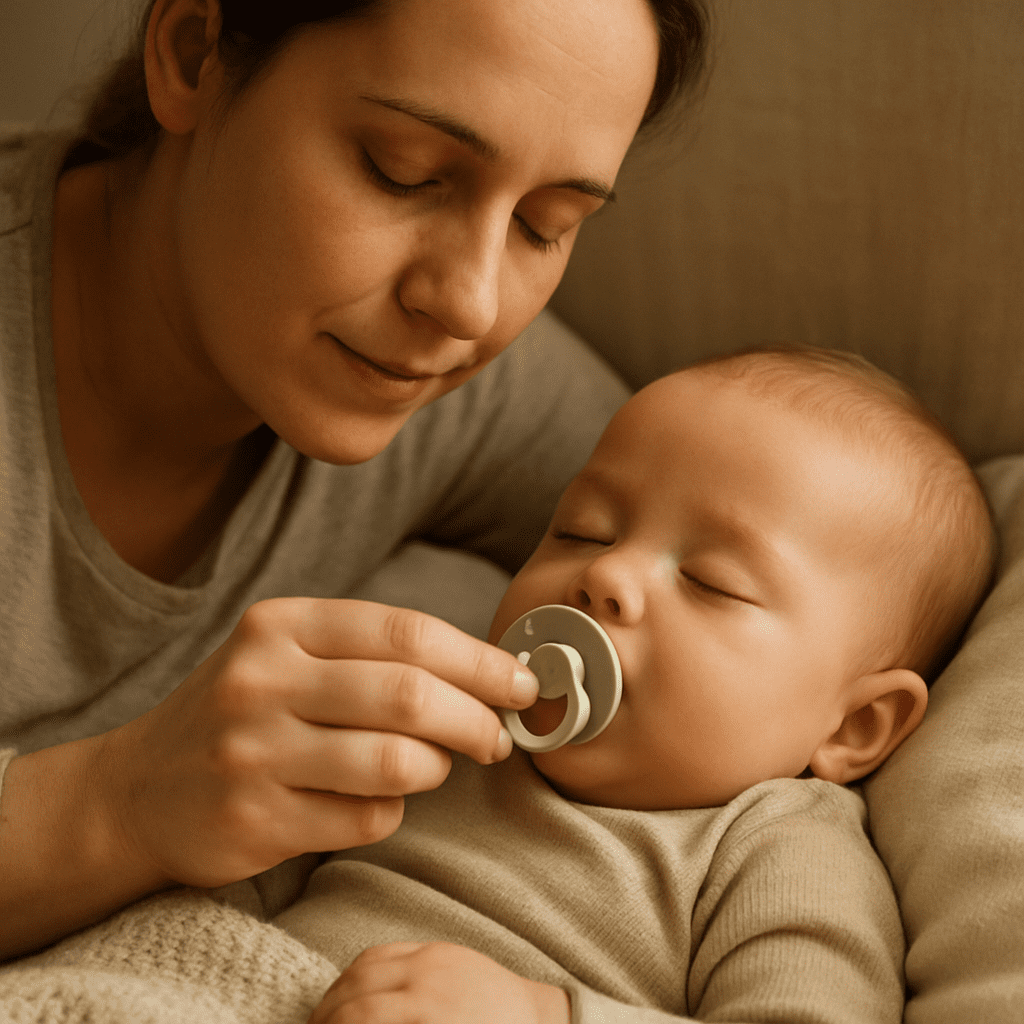
It might sound surprising, but using a Pacifiers to reduce the risk of SIDS is recommended by many pediatric associations. Sucking keeps the tongue forward, which keeps the airways clear, and prevents the baby from falling into too deep a sleep. Offer your baby a pacifier to fall asleep. However, if it falls out at night, you don't necessarily need to put it back in their mouth. Important: For breastfed babies, the pacifier should only be introduced once the breastfeeding relationship is well established after a few weeks.
Together, but safe: The dangers of co-sleeping in the parents' bed
The topic of family beds is polarizing. Many mothers and fathers enjoy the uncomplicated closeness during nighttime breastfeeding. Nevertheless, medical professionals must clearly point out the Dangers of co-sleeping in the parents' bed Note (Co-sleeping here refers to sharing the exact same sleeping surface, also called bed-sharing).
Adult beds are generally too soft for babies. There are dangers from bulky blankets, thick pillows, and the parents' body heat, which can overheat the child. Additionally, there's a risk that a parent could accidentally roll over onto the child while deeply asleep.
Sharing the bed is particularly dangerous, even absolutely taboo, under the following circumstances:
- If one or both parents are smokers (even if they smoke outside of the bedroom).
- If alcohol, sleeping pills, or drugs were consumed.
- If the baby was born prematurely or had a low birth weight.
- If the baby is younger than four months old.
The safest alternative, combining maximum closeness and maximum safety, remains the already mentioned bedside crib. This way, you are close to each other, can hold hands, and react quickly at night without exposing the baby to the risks of the large adult bed.
Conclusion: Security for more peaceful nights
Even though the thought of Sudden Infant Death Syndrome is frightening, you as a parent have an incredible number of options to protect your child. Let's review the most important rules for safe baby sleep:
- Always sleeping in Back-lying.
- A good fit Sleeping bag instead of a loose blanket.
- The own, safe beds in the parents' bedroom.
- A solid, breathable mattress.
- A completely empty bed without pillows, bumpers, or stuffed animals.
- A cool room temperature (16-18°C) and avoiding Overheating.
- An absolute non-smoking environment.
By establishing these simple yet crucial guidelines in your daily life, you create the best possible conditions for your child's health. Safe baby sleep not only protects your newborn but also gives you, as a mother or father, the inner peace to find restful sleep yourself. And you can truly use that in the exciting everyday family life!