
Summer is finally here! The warm season draws us outdoors into nature, to the lake, or simply into our own backyard. For new parents, however, this time brings not only joy but also some questions. The skin of infants and young children is still extremely thin and has no natural protection against aggressive UV radiation. Reliable protection from heat and sunlight is therefore of utmost importance.
In this detailed guide, we will focus on exactly this topic: Baby Safe in the Sun: 5 Important Tips. We'll show you in a practical way how your little darling can get through the warm days unharmed and happy – from the right clothing to the suitable outdoor spot to optimal sun protection in the stroller.
Why a baby's skin is so vulnerable
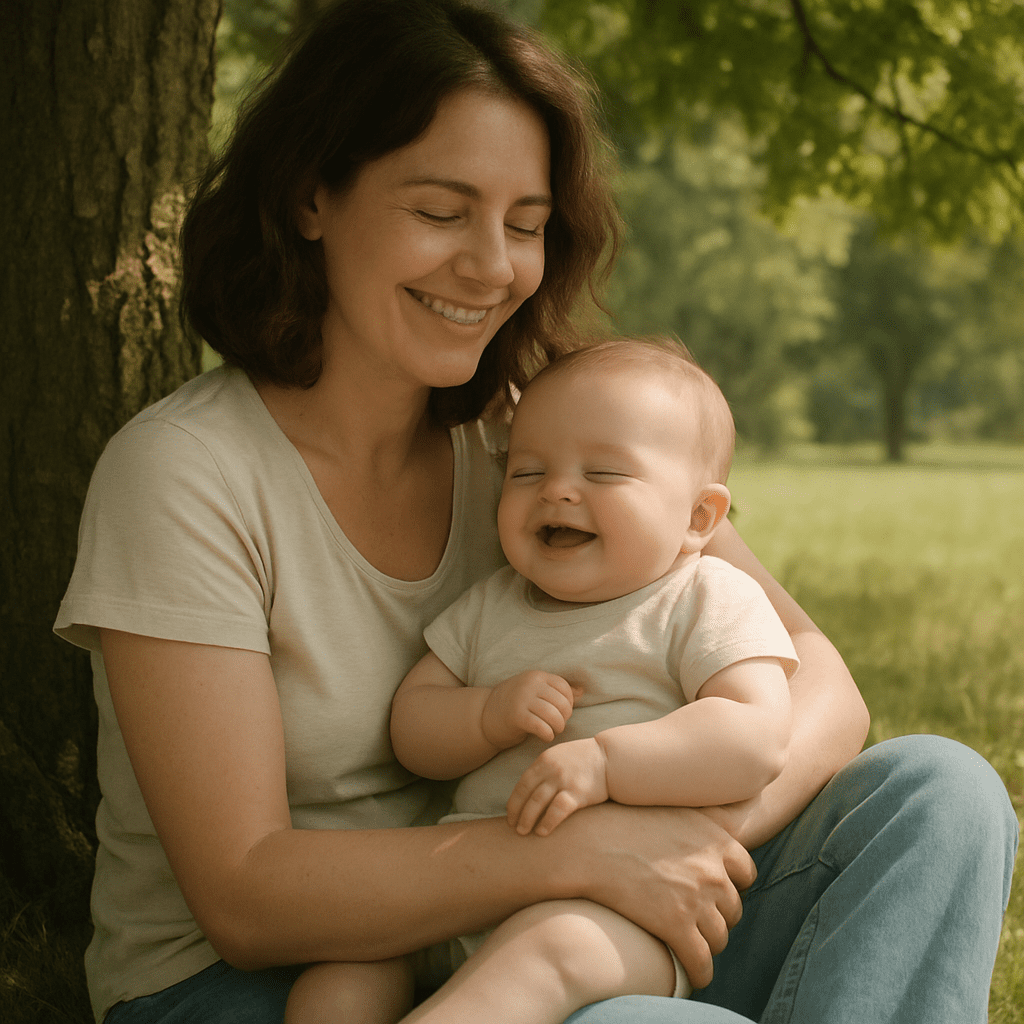
Before we get to the specific tips, it's important to understand why sun protection is so important for little ones in the first place. Baby skin is about five times thinner than adult skin. The so-called natural protection mechanism, where the skin tans and thickens by forming melanin (sun callus), is not yet developed at all in the first year of life.
Many new parents ask themselves the question: At what age can babies be exposed to direct sunlight? The clear answer from pediatricians and dermatologists is: For the entire first year of life, babies should absolutely not be in direct, intense sun. Even after that, direct exposure should be avoided. If you search the internet for „Baby sunbathing tips“ Anyone seeking this will quickly realize that genuine sunbathing for babies is an absolute taboo. The goal, rather, is to safely enjoy the fresh air in the shade.
Another important factor is the UV Index Relevance for Sensitive Baby Skin. The UV index indicates the intensity of sunburn-effective UV radiation. From an index of 3, protective measures are already required for adults – for babies: caution is advised even at low levels (or when cloudy, as UV rays penetrate clouds). Therefore, it's best to check the local UV index daily via a weather app in the summer.
Let's now turn to essential advice to make your summer adventure safe.
Tip 1: Choose the right time and the perfect place
The most effective protection from the sun is to avoid it when it is strongest.
Keep an eye on midday heat and ozone pollution
Among the golden Avoid midday heat: Rules of conduct for parents The basic rule is: Between 11:00 AM and 3:00 PM, you should stay indoors with your baby or stay in a very cool, heavily shaded place. During this time, UV radiation is most aggressive.
But not only UV rays, but also air quality plays a role in midsummer. The topic Ozone pollution and heat protection for toddlers is often underestimated. On hot, windless days, ground-level ozone levels rise sharply, which can irritate your baby's sensitive airways. Therefore, you should ideally move your walks to the early morning hours or to the late afternoon/early evening.

Tip 2: Play it safe with the right clothing
Since sunscreen should often be avoided for very small babies (more on that in Tip 3), textiles are the best UV protection babies. Clothing acts as a physical shield.
What to look for in UV protective clothing for babies.
Not every T-shirt offers the same level of sun protection. A standard white cotton T-shirt often has a sun protection factor (UPF) of only 10 to 15. When it gets wet, that number drops to below 5. If you're wondering: What to look for in UV protection clothing for babies, you should consider the following points:
- Sun Protection Factor: Watch for the „UPF 50+“ seal. This means that less than one-fiftieth of UV radiation penetrates the fabric.
- Denser material: In principle, the tighter and darker the fabric, the fewer rays penetrate it.
- Certification Searching for clothing tested according to „UV Standard 801.“ This standard also tests textiles when wet, stretched, and worn.
- Comfortable fit The clothing should fit loosely so that it doesn't get too hot.
The head and the eyes
Your baby's head is often most exposed to the sun. A Baby sun hat with neck protection. is an absolute must. It should have a wide brim to shade the face and be long enough in the back to completely cover the sensitive neck.
The protection of little eyes is also important. Babies' lenses are much more permeable to UV rays than those of adults. Therefore, invest in a Baby sunglasses with UV protection 400. Pay attention to the CE mark, a scratch-resistant surface, and a soft, elastic band that holds the glasses securely but comfortably on the back of the head.
Tip 3: Sunscreen – When, how, and which one?
The correct application of Sunscreen for babies is a widely discussed topic among parents.
For the little ones: Less is more
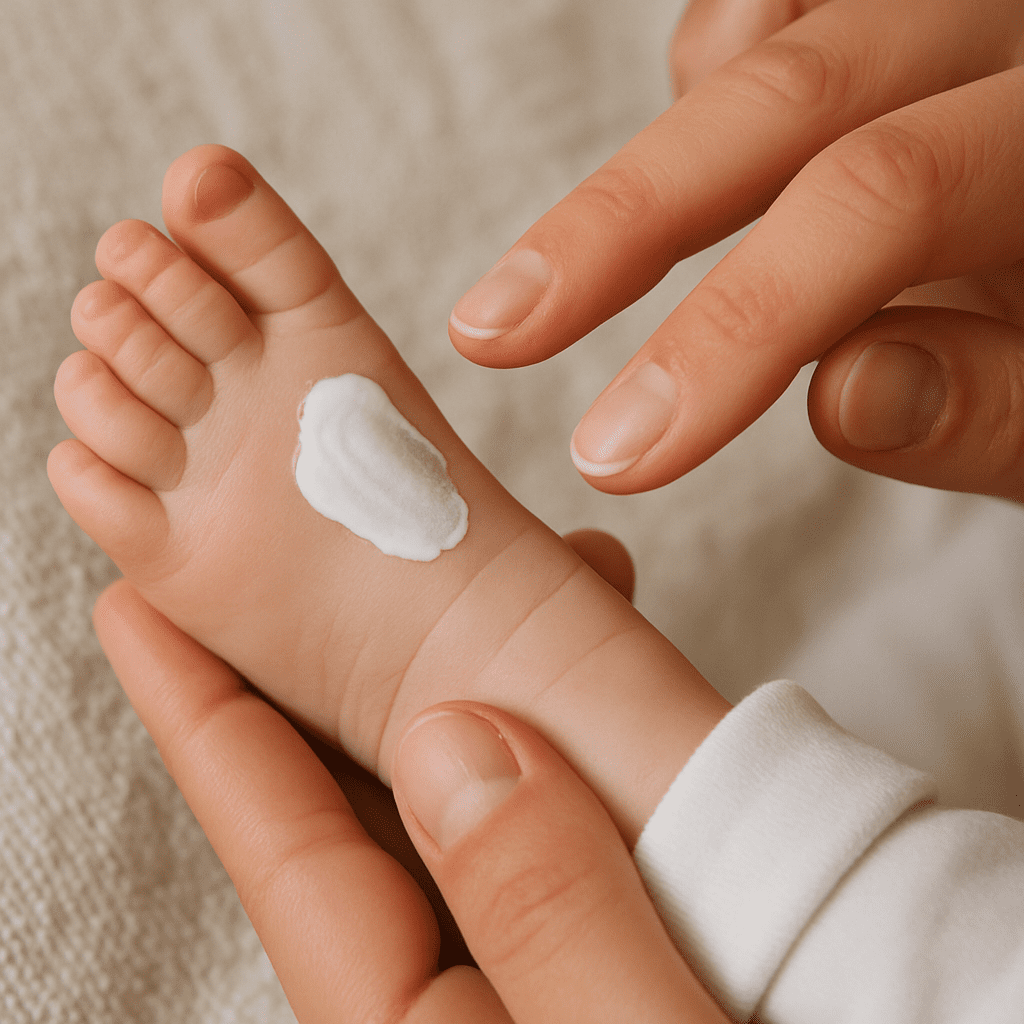
Particular caution is advised in the first months of life. The Sun protection for babies under 6 months should primarily consist of shade and long, loose clothing. Why? The skin barrier is so thin that ingredients from creams can be absorbed very easily into the bloodstream. Additionally, a baby's surface area is relatively large in proportion to its body weight. Therefore, sunscreen should only be thinly applied as a „last resort“ to areas that cannot be covered (such as the bridge of the nose, the back of the hands, or the back of the feet) in infants under six months of age.
Mineral vs. Chemical Sunscreen for Babies
Once your baby is older, applying cream becomes routine whenever they go outside. When choosing a product, many people face the comparison: Mineral vs. Chemical Sunscreen for Babies.
- Chemical filters penetrate the skin, convert UV rays into heat, and take about 20 to 30 minutes to work. Some of these filters can trigger allergic reactions or are suspected of having hormonal effects.
- Mineral filters (also called physical filters) such as zinc oxide or titanium dioxide remain on the skin's surface and reflect sunlight like tiny mirrors. They act immediately after application and are considered much better tolerated by delicate baby skin. They often leave behind the typical white film – the so-called „white cast.“ However, this is practical for parents: this way, you can see exactly where you've already applied cream!
Check ingredients
Always do a before buying Baby Sunscreen Ingredients Check When in doubt, opt for certified natural cosmetics for infants. Avoid products containing perfumes, parabens, alcohol, or preservatives. Nanoparticles (often declared as „nano“ in the INCI list) are also still viewed critically for babies.
Tip 4: Traveling safely and comfortably in the stroller
When you're out with the stroller, your child seems well-protected. But be careful: a stroller can heat up extremely quickly on warm days.
The method of simply draping a cloth or blanket over the opening of the car is life-threatening. This does not create shade inside the car, but rather a heat buildup – temperatures can climb to over 40 degrees within minutes!
How do I donate properly to Shadow?
If you Provide shade in the stroller want, you must ensure that the air can continue to circulate. But which device is best suited?
A Stroller sun sail vs. sun umbrella comparison helps with the decision:
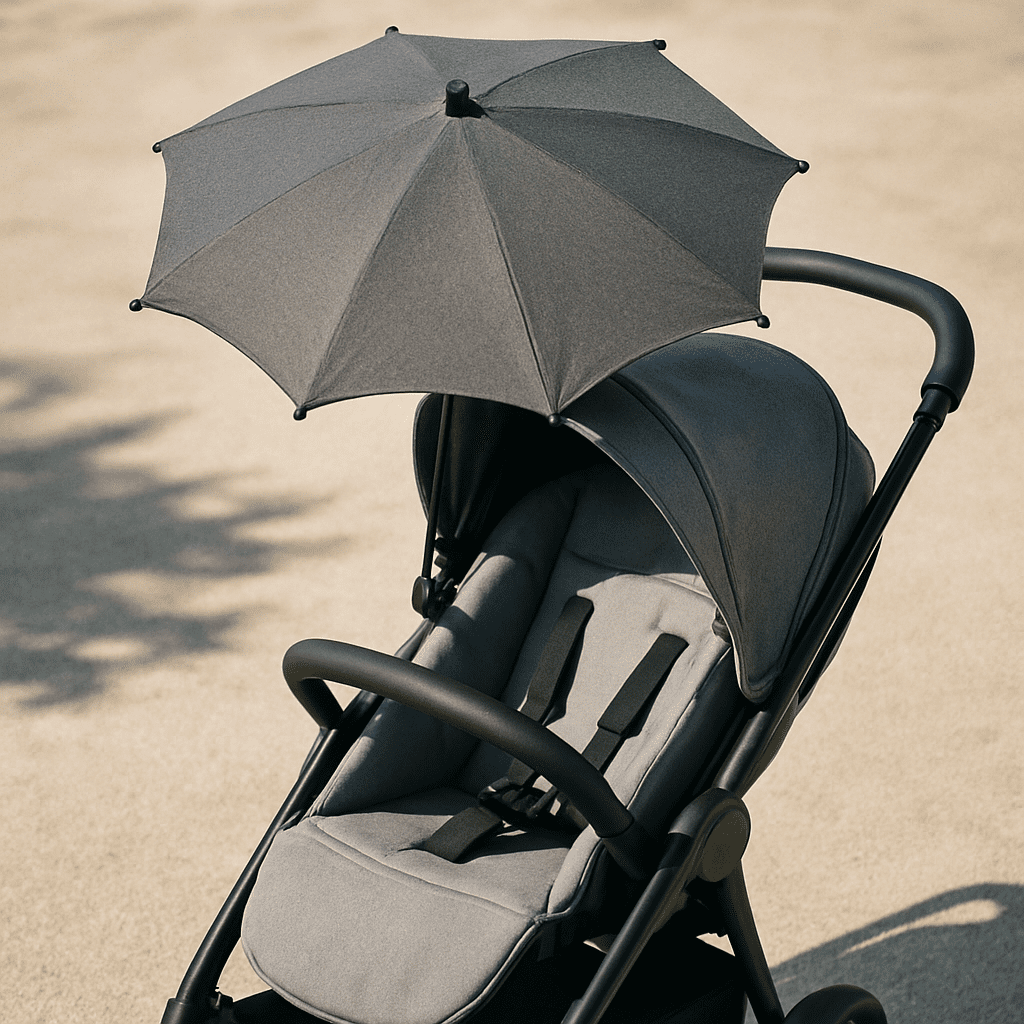
- The parasol It can be bent flexibly and provides shade exactly where the sun shines. The sides remain completely open, which guarantees excellent air circulation. The disadvantage: On winding paths, the umbrella constantly needs to be readjusted, which can be annoying in the long run.
- The sunshade It is stretched over the convertible top and the handlebar or the bassinet. It can usually be moved left and right. Be absolutely sure that it is made of breathable fabric and that you, the stroller never completely closes. A good sail has open sides for airflow. It is easier to handle than the umbrella, but sometimes obstructs the baby's view.
No matter which option you choose, regularly check your baby's neck with your hand to see if they are too warm.
Tip 5: Combat heat from within and recognize warning signs
Besides UV radiation, heat itself is your baby's biggest enemy. Babies don't sweat as effectively as adults, which is why they have a harder time regulating their body temperature.
Drinking enough is vital
To a dangerous Preventing dehydration in babies during summer To be able to, fluid intake must be adjusted.
- Stillbabys On hot days, they usually won't need extra water. However, they will want to nurse more often, usually for short „thirst-quenching“ meals. Let them! The foremilk is particularly watery and perfectly quenches thirst. Remember that as breastfeeding mothers, you yourself need to drink significantly more water.
- Bottle babies Here, pre-feeding can also be given as needed.
- Weaning age When your baby starts eating purees or family food, you should regularly offer them unsweetened tea or water from a cup or bottle. Offer small sips, even if the baby doesn't ask for it directly.
What should you do in an emergency?
Even with the best protection, it's possible for babies to get overheated or sunburned. It's essential that you know how to react.
If a baby has been exposed to extreme heat or sun on its unprotected head for too long, it can become dangerous. You must react immediately if you Recognizing sunstroke symptoms in babies should. These signs include a very red, hot head with a simultaneously cool or normal body temperature, noticeable restlessness or tearful behavior that can later turn into apathy. Vomiting, rapid breathing, and refusal to eat are also typical warning signs. Do not hesitate in such a case: Take the child to a cool, dark room immediately, slightly elevate their head, gently cool it with lukewarm (not ice-cold!) damp cloths, and call an emergency doctor or go to the nearest emergency room immediately! Sunstroke in infants is always a medical emergency.
The skin can also become red if UV rays have penetrated despite all precautions. The First Aid for Sunburn in Toddlers or baby focuses on cooling. Apply cool, damp cloths to the affected areas. Avoid ice packs, as these can further damage skin cells. Special, gentle after-sun lotions for babies or pure aloe vera gel will relieve the pain. If blisters form or a larger area of skin is affected, you should definitely see a pediatrician immediately, even with a sunburn.
Conclusion: This is how to have a relaxed and safe summer.
A summer with a baby is wonderful and offers the opportunity for countless new experiences in the fresh air. If you Baby Safe in the Sun: 5 Important Tips With these considerations, nothing stands in the way of carefree outdoor fun.
In summary: Avoid direct sunlight, especially during midday. Protect your favorite's sensitive skin best with dense UV clothing, a wide-brimmed hat, and shaded areas. For exposed areas – provided your child is older than six months – it's best to use a mineral sunscreen without harmful additives. Always ensure sufficient ventilation in the stroller and offer plenty of fluids.
If you are attentive and correctly interpret your baby's warning signs, you can enjoy wonderful summer days together – safely, securely, and well-protected. We wish you a wonderful and sunny summer!