
A positive pregnancy test, the first ultrasound image, and the anticipation of a little miracle – pregnancy is an exciting journey. But the closer the estimated due date gets, the more the baby's position in the womb comes into focus. Most babies turn head-down in time into the ideal starting position. But what if the baby prefers to stay sitting up? Many expectant parents then inevitably ask themselves the question: Breech presentation: What does that mean for childbirth?
In this comprehensive guide, we clarify your options for encouraging your baby to flip and what to consider when choosing a delivery method.

What exactly is a breech presentation?
From one Breech presentation is when the unborn baby is positioned in the mother's pelvis with its bottom or feet first, instead of its head. Many women wonder: From which week of pregnancy does the baby turn? Is it really final? Most babies settle into a head-down position between the 32nd and 36th week of pregnancy. If the baby remains in the upright position beyond this, it is referred to as a breech presentation.
Often, pregnant women can already Recognizing symptoms of a breech presentation in a baby. Typical are strong fetal movements and kicks in the lower pelvic area or even in the bladder, while a hard, round resistance can be felt under the rib cage – the baby's head.
The different forms of breech presentation
Not every baby sits in the same position. For later birth planning, it is important to know the exact position. Medical professionals distinguish primarily between: Complete breech presentation vs. footling breech.
- Complete breech presentation The baby is sitting bottom-down with legs stretched upwards, so the feet are next to the face. This position is most favorable for a natural birth.
- Perfect lie The baby is „standing“ in the pelvis, with both feet pointing directly toward the birth canal. A spontaneous birth is usually advised against in this situation.
Interestingly, some parents also seek answers outside of medicine. The Spiritual meaning of breech presentation is often associated with the child’s „stubborn“ or „special“ journey. Some midwives believe the baby needs a little more time emotionally, or the mother is encouraged to release unconscious fears about the birth.

Gentle Methods: How to Lure Your Baby into the Right Position
As the due date approaches, there are various gentle ways to encourage the baby to turn. Midwives know numerous Exercises for turning the baby in the womb, that you can safely try at home.
- Indian Bridge (Instructions and Effects): This exercise is a classic. Lie on your back and prop up your pelvis with pillows so that it's significantly higher than your head. Hold this position for about 10 to 15 minutes. The effect: The baby slips easily out of the pelvis, giving it the necessary space for a somersault.
- Moxibustion for gentle turning A traditional Chinese method. In this method, the midwife warms an acupuncture point on the mother's little toe with a smoldering moxibustion cigar. The heat is intended to relax the uterus and encourage the baby to move more.
- Flashlight Method for Turning the Baby: Babies can distinguish between light and dark from a certain point on. Shine a flashlight on the baby's stomach and slowly move it from the baby's head towards the pubic bone. Babies often follow the light.
The Medical Alternative: External Cephalic Version
If the gentle methods don't work, the External Turn (Prospects for Success and Risks) discussed in the clinic. Starting from the 37th week of pregnancy, an experienced doctor attempts to turn the baby from the outside through targeted manual maneuvers on the abdomen. The success rate is about 50 to 60 percent. Since complications can occur in rare cases (such as premature labor or problems with the placenta), this procedure is always performed under ultrasound and CTG monitoring, as well as with immediate surgical readiness.
Breech Birth: Cesarean Section or Vaginal Birth?
The diagnosis of a breech presentation no longer automatically means a Cesarean section. The decision is often: Cesarean section vs. vaginal birth for breech presentation. Both paths have their justification, but require individual and careful consideration.
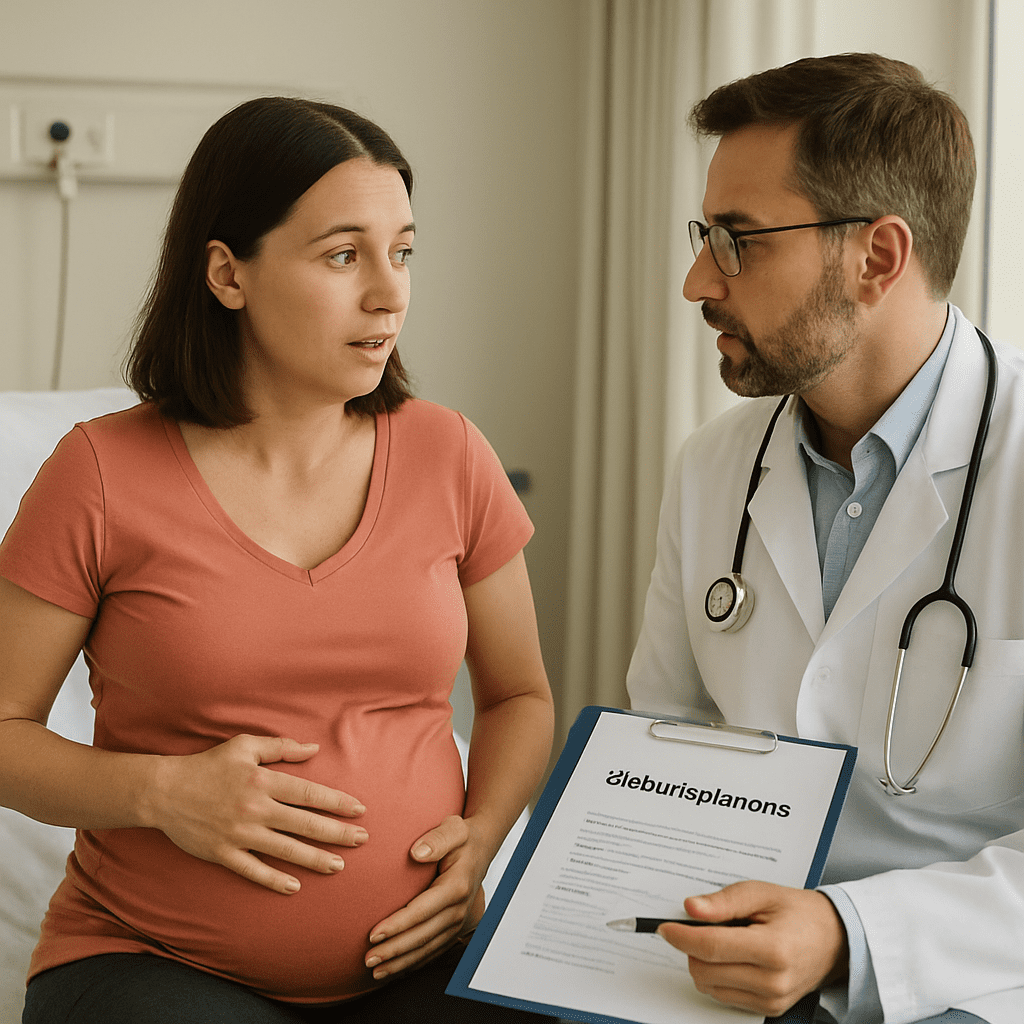
A vaginal birth in a breech presentation
A Vaginal birth in breech presentation is absolutely possible and is often practiced successfully in specialized clinics. However, strict medical requirements must be met.
The Prerequisites for Vaginal Birth in Breech Presentation include among others:
- The baby is in a frank breech presentation.
- The estimated weight of the baby is within the normal range (usually between 2,500g and 3,800g).
- The baby's head is not hyperextended.
- The pregnancy has been uncomplicated so far.
A crucial step before delivery is the Pelvic measurement before vaginal delivery (mostly via MRT). This ensures that the mother's pelvic measurements are large enough for the baby's head, which is born last in this birth position.
Another essential point is the Clinic search for spontaneous breech birth. Not every hospital offers spontaneous breech births. Find a maternity clinic in good time with experienced obstetricians and midwives who specialize in this area.
Risks and when surgery is necessary
A Breech birth Naturally, it requires expertise, as the head—the largest and hardest part of the body—comes last. Among the Risks of vaginal breech birth count, among other things, umbilical cord prolapse (especially in a breech presentation) or a lack of oxygen if the head remains in the birth canal for too long.
That's why the question often arises: When is a C-section necessary for a breech presentation? A planned C-section becomes unavoidable when:
- The baby is estimated to be extremely large or very small (premature).
- The child is lying in a perfect footling presentation.
- The maternal pelvis is too narrow according to the measurement.
- Placenta previa.
- During labor, the fetal heart tones drop or labor progress stalls.
Conclusion: Trust yourself and your team
The diagnosis of a breech presentation understandably causes uncertainty at first. However, regardless of whether your child turns with gentle methods, you aim for a spontaneous delivery, or a planned C-section is the safest route: the most important thing is that mother and child are doing well.
Inform yourself thoroughly, ask your medical team all your questions, and choose a clinic where you feel you are in the best hands. A breech presentation is simply a variation of nature – and with the right preparation, this birth will also be a beautiful, unforgettable experience.