
You've already tried countless bandages, tinctures, and waited it out for a long time, but that persistent little bump on your child's foot is simply still there. Almost all parents who want to treat warts in children gently know this everyday frustration, which is why you can first let go of unnecessary guilt: Neither a lack of hygiene nor mistakes in care caused this.
According to pediatricians' recommendations, these bothersome little knots are a completely normal, everyday encounter with the Human Papillomavirus (HPV). This invisible culprit lurks on damp surfaces in swimming pools or gyms, and takes advantage of tiny cracks in the skin's surface to settle in unnoticed.
Why doesn't the body sound the alarm then? Imagine the developing immune system like an inexperienced security guard who simply doesn't have this particular intruder on their wanted list yet. These skin changes serve as an important training exercise for the body's own defenses, which is why lasting healing requires realistic expectations and usually weeks instead of a few days.
Fortunately, no one has to fear painful procedures to finally get rid of warts in children. With the right strategy and gentle home methods, your child will soon be running around completely carefree and without bulky bandages.
The Security Check: Why Your Child's Immune System Needs to ‚Learn‘
Parents often wonder why a wart suddenly appears, even though their last visit to the indoor pool was weeks ago. The explanation for this is the so-called incubation period. The virus can lie dormant in the skin for months, invisible, before it stimulates the cells to grow unnaturally fast. During this time, your child's immune system works like a young security service that simply doesn't have this specific intruder on its list yet and lets it pass unnoticed.
The fact that the youngest often develop entire outbreaks of warts has three main reasons:
- A more permeable skin barrier: Children's skin is thinner and softer. Tiny, barely visible cracks caused by dry skin serve as open doors for the virus.
- A still-learning defense system: Even if we strengthen the immune system against HPV (human papillomaviruses) through good nutrition, the child's body must first build its own experience to specifically ward off these viruses.
- Frequent barefoot contact: Whether during school sports, at the swimming pool, or playing in the home bathroom – children intensely share their paths with others, making it easier for them to come into contact with the pathogen.
With this background knowledge, it's often easier to remain patient. If you want to reduce the contagiousness of common warts, maintaining the skin barrier is already an excellent first line of defense. For the right treatment, it is crucial to first identify exactly which pathogen we are dealing with:
Common wart or molluscum contagiosum? This is how you tell the difference
A glance at your child's skin often triggers immediate uncertainty. Searching online for images of warts in children brings up countless frightening pictures that are of little help in everyday life. However, accurately identifying the unwanted visitors is crucial for success. Most of the time, we encounter two very different skin changes: the classic plantar wart (Verruca plantaris) and the molluscum contagiosum (Molluscum contagiosum).
To help you choose the right treatment approach, a simple visual classification is useful:
- Corns They grow painfully inward on the soles of the feet due to body weight. They have a rough, calloused surface and often show small, dark dots. (Common warts on the hands look similarly rough but grow outward in a cauliflower-like manner.)
- Molluscum contagiosum They frequently appear in small clusters on the trunk, arms, or legs. They are pinhead-sized, smooth nodules that have a pearly luster and a tiny indentation in the center.
The dark spots on common warts are what regularly worry parents. However, these are not deep „roots,“ but merely tiny, dried blood vessels – often even an excellent sign that the body is already reacting. With this certainty, you can calmly decide which home remedies for plantar warts in children are truly effective.
With shiny molluscum contagiosum, patience is often all that's needed, as they are usually cleared by the immune system on their own after a few months. If you still want to support this decline and treat molluscum contagiosum naturally, while protecting your child and their siblings from ping-pong-like transmission, mild methods are required.

Gentle Help from Nature: Pain-Free Home Remedies for Sensitive Children's Skin
Aggressive acids often bring tears to the eyes of little ones. Those looking for a gentle wart remedy for sensitive skin can find pain-free alternatives in herbal medicine that gently support the body's still-learning „security service.“ Tea tree oil, with its natural antiviral properties, is a proven helper. Since undiluted essential oils can quickly irritate delicate children's skin, dosage is crucial: mix just one drop with a teaspoon of mild olive oil. Applied this way, tea tree oil works safely against warts in children and without unpleasant burning.
Equally valuable is the plant extract from the arborvitae tree. The application of Thuja tincture in children aims to precisely stimulate immune defense so that they finally recognize the viral invader in the skin. It is best to make the treatment an evening ritual that gives your child a sense of control back:
- Gently cleanse the affected skin area with lukewarm water beforehand.
- Let your child dab the tincture directly onto the wart themselves with a cotton swab, while ensuring that healthy skin is avoided.
- Stick a colorful „magic plaster“ over it together to optimally seal in the active ingredient and protect siblings from infection.
If this gentle natural medicine stagnates after a few weeks because the pathogen has already anchored itself too strongly, the small body needs more support from tried-and-tested remedies from the pharmacy.
Bandaids, Liquids, or Freezing? Your Guide Through the Pharmacy
When gentle home remedies reach their limits, the pharmacy offers reliable alternatives. The first choice for pain-free wart removal for young children are tinctures or plasters containing salicylic acid. This active ingredient gently softens the hard skin – a process of callus dissolution that medical professionals call „keratolysis.“ The wart is then removed layer by layer, like an onion. Those looking for the best wart plaster for children should pay attention to proper preparation: a ten-minute warm foot bath before applying the plaster softens the area and makes the skin optimally receptive to the active ingredient.
Families often face the decision at the shelf: peel off or freeze? The difference between salicylic acid and cryotherapy lies in intensity and sensation:
- Salicylic Acid (Peeling): Works gradually over several weeks. The method is gentle and anxiety-free, but requires consistency from you with regular patch changes.
- Cryotherapy (Freezing): It is designed for speed. The ice-cold spray creates a tiny, controlled injury that immediately alerts the still-developing immune system. The major drawback: the cold stings noticeably and often brings tears to the eyes, which is why this method is usually unsuitable for sensitive toddlers.
Ultimately, your child’s age and pain tolerance will determine the course of action. Patience is your most important ally here. However, if the area remains stubbornly sore despite consistent care, becomes red, or your child suddenly complains of pain when walking, self-treatment is no longer sufficient.
When is a visit to the pediatrician essential?
Sometimes, consistent care alone isn’t enough. If you’re unsure when to take your child to the doctor, here’s a simple rule of thumb: as soon as a skin condition starts to affect your child’s well-being or becomes inflamed, it’s time to consult a professional.
Medical help is urgently needed with these five warning signs:
- Severe redness, warmth, or pus (this indicates a painful secondary infection in which additional bacteria have entered the cracked skin)
- Sudden pain while walking normally
- Rapid spread to other parts of the body
- Warts on the face or mucous membranes
- Bleeding, open areas
In practice, pediatricians use safe, professional removal methods that are far more effective than over-the-counter products. To help speed up wound healing at home after wart removal, keep the affected area dry and protect it with a breathable bandage so that the skin barrier can regenerate undisturbed.
Stopping the Ping-Pong Effect: Prevention at the Swimming Pool and at Home
A healed foot is a big reason to breathe a sigh of relief, but now it’s important to prevent a recurrence or transmission to siblings. Viruses don’t just spread through direct skin contact; they also thrive on damp floors or shared textiles—a phenomenon known as indirect smear infection. To reduce the risk of spreading warts among children, follow this simple rule at home: Keep towels, bath mats, and nail clippers strictly separate, and wash textiles at a minimum temperature of 60 degrees.
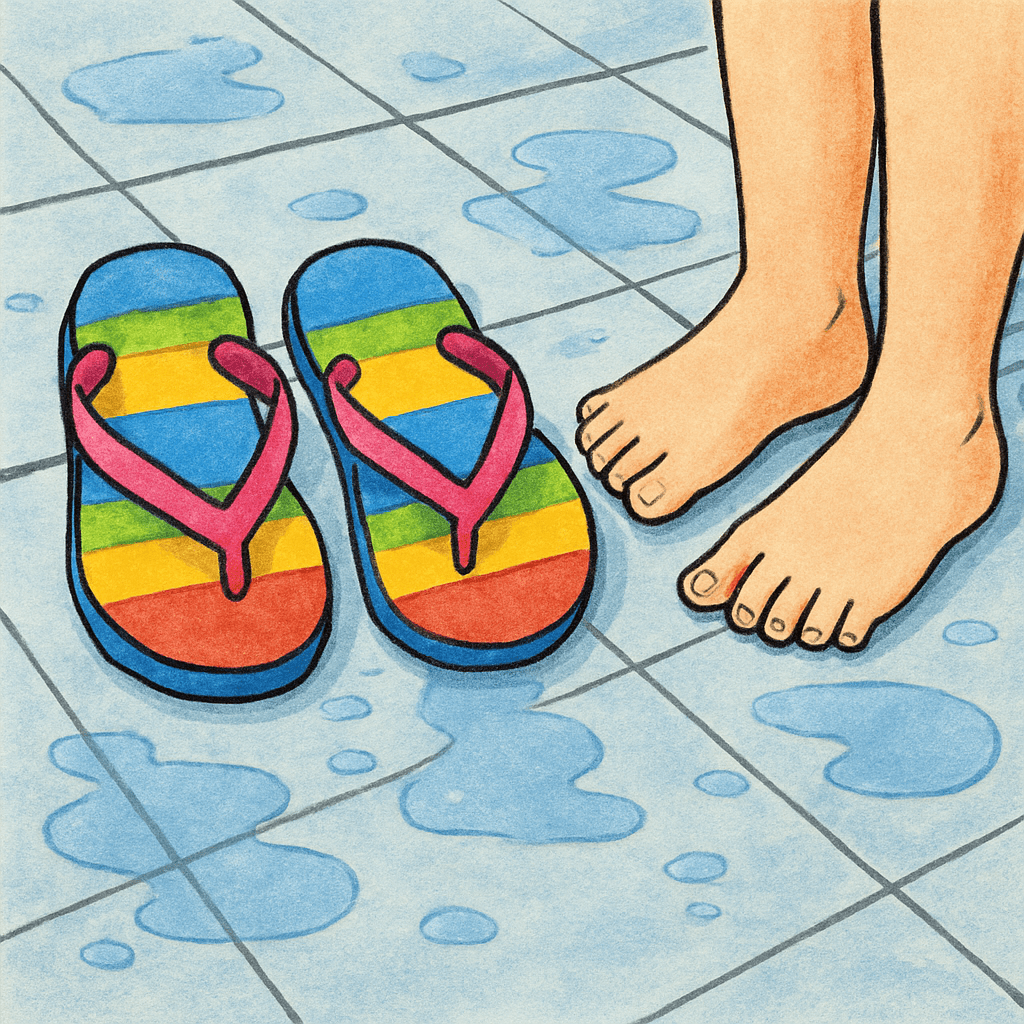
The virus has an easy time of it, especially in public showers and changing rooms, when bare feet come into contact with wet tiles. If you want to specifically prevent warts from forming at the pool, start packing a set of „anti-wart gear“ in your child’s swim bag right away:
- Bring your own bath shoes (wear them consistently from the locker to the pool edge)
- A separate, small towel exclusively for the feet
- A gentle skin disinfectant spray for post-shower care
In addition to these external protective measures, an intact skin barrier is your child's best natural „bodyguard.“ Dry, cracked skin offers viruses tiny, open entry points; regular application of moisturizing foot lotions, on the other hand, strengthens the natural protective layer and keeps invaders out.
Your Roadmap to Wart-Free Skin: Summary and Patience Check
Previously, the stubborn nodule on a child's foot often felt like an endless, frustrating battle. Today, you know that this is simply a normal training camp for the child's immune system, and you now have a safe tool at your disposal to act gently and precisely.
To finally get rid of warts in children, these three golden rules for success will help you in everyday life:
- Consequence Apply selected treatments like plasters or tinctures reliably and regularly.
- Hygiene Stop the contamination within the family by strictly using separate towels and bath shoes.
- Patience Practice patience and give the little body the time it needs to learn.
Desperate parents often ask when warts disappear on their own. The reassuring truth is that they usually heal completely on their own once the immune system permanently recognizes the invader. Until the immune system finally „clicks“ into action to fight it off, you can accompany your child with confidence, strength, and absolutely no stress.