The second birthday is a magical moment in a child's life. Suddenly, the former baby transforms into an alert toddler with a strong will of their own – and above all, with their own voice. For many parents, this is an exciting yet uncertain time. When it comes to the topic of Language Development of 2-Year-Olds: These Are Typical Milestones go, mothers and fathers often have countless questions: Is my child speaking enough? Is the pronunciation normal? When should I worry?
Language is the most important key to the world. It enables children to express their needs, make social connections, and understand their environment. In this comprehensive guide, you will learn all about the fascinating advances in Speech development of 2-year-olds Children: What to look out for and how to lovingly and playfully support your offspring in everyday life.
Key Milestones: What's Happening in a Toddler's Mind?
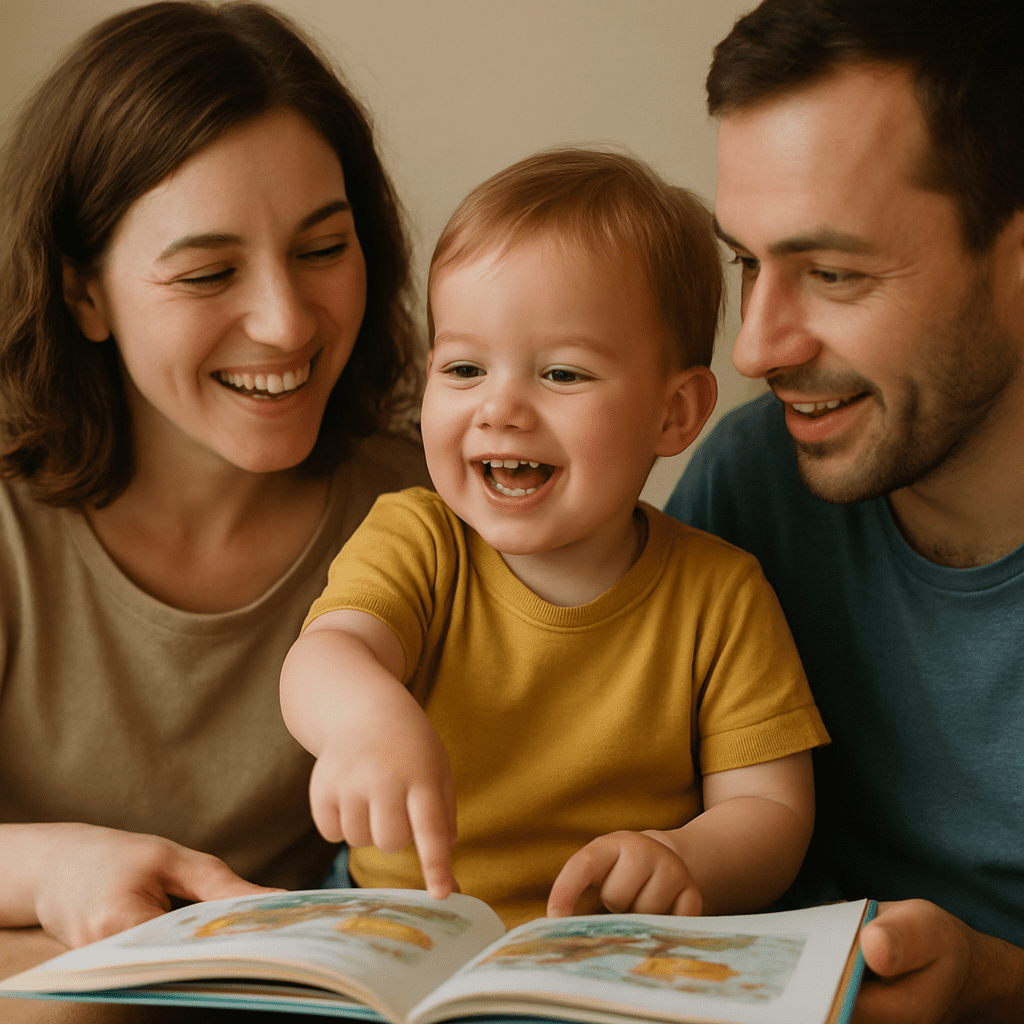
Around their second birthday, a real fireworks display of connections happens in toddlers' brains. Language skills are now making enormous leaps.
The vocabulary is exploding
Perhaps until now you could count your child's individual words on one hand. But suddenly, everything is happening very quickly. Vocabulary size at two years old lies between 50 and 200 words on average. In this so-called „vocabulary explosion,“ children sometimes learn new words almost daily. First, these are mainly nouns (words for things and people); shortly thereafter, important verbs like „to have,“ „to go,“ or „to do“ follow.
It is also essential to Difference between active and passive vocabulary to know. The active vocabulary includes all the words the child says themselves. The passive vocabulary, on the other hand, is much larger: it includes all the words the child already understands. Language Comprehension in Early Childhood is often already astonishingly well developed. Even if your child can't yet say the word „shoe cabinet,“ they will most likely be able to follow the instruction „Bring your shoes to the shoe cabinet“ without any problems.
From individual words to grammar
another exciting step is the Forming Two-Word Sentences. The era of individual words is over. From „car“ and „daddy,“ children will now purposefully say „daddy car“ (that's daddy's car) or „car want“ (I want the car). These simple combinations drastically multiply your child's communication possibilities.
Additionally, the little ones are now starting to, Apply basic grammar rules to learn. For example, they try to form the plural of words (e.g., „Autos“) or place verbs at the end of the sentence. The fact that cute mistakes still happen (like „gehelft“ instead of „geholfen“) is a fantastic sign! It shows that the child has understood the systematic nature of the language and is now applying this logic to unknown words.
How children understand the world: understanding, acting, and expressing
The Language development children (or in children) is a complex interplay of hearing, understanding, motor skills, and social interaction.
The Motor Challenge of Pronunciation
Considering the Speech Development in Toddlers, it quickly becomes clear what a supreme motor feat speaking requires. Lips, tongue, jaw, and vocal cords must be perfectly coordinated. It is therefore absolutely normal and typical at this age for difficult sounds or sound combinations to still be missing. An „sh,“ „r,“ or „k“ is often replaced by easier sounds like „s,“ „l,“ or „t.“ „Schere“ becomes „sere,“ and „Kuh“ becomes „Tuh.“ Syllables are often omitted (e.g., „Nane“ instead of „Banane“). All of this is part of completely normal milestones and usually corrects itself over the course of the third and fourth year of life.
More than just words: facial expressions and body language
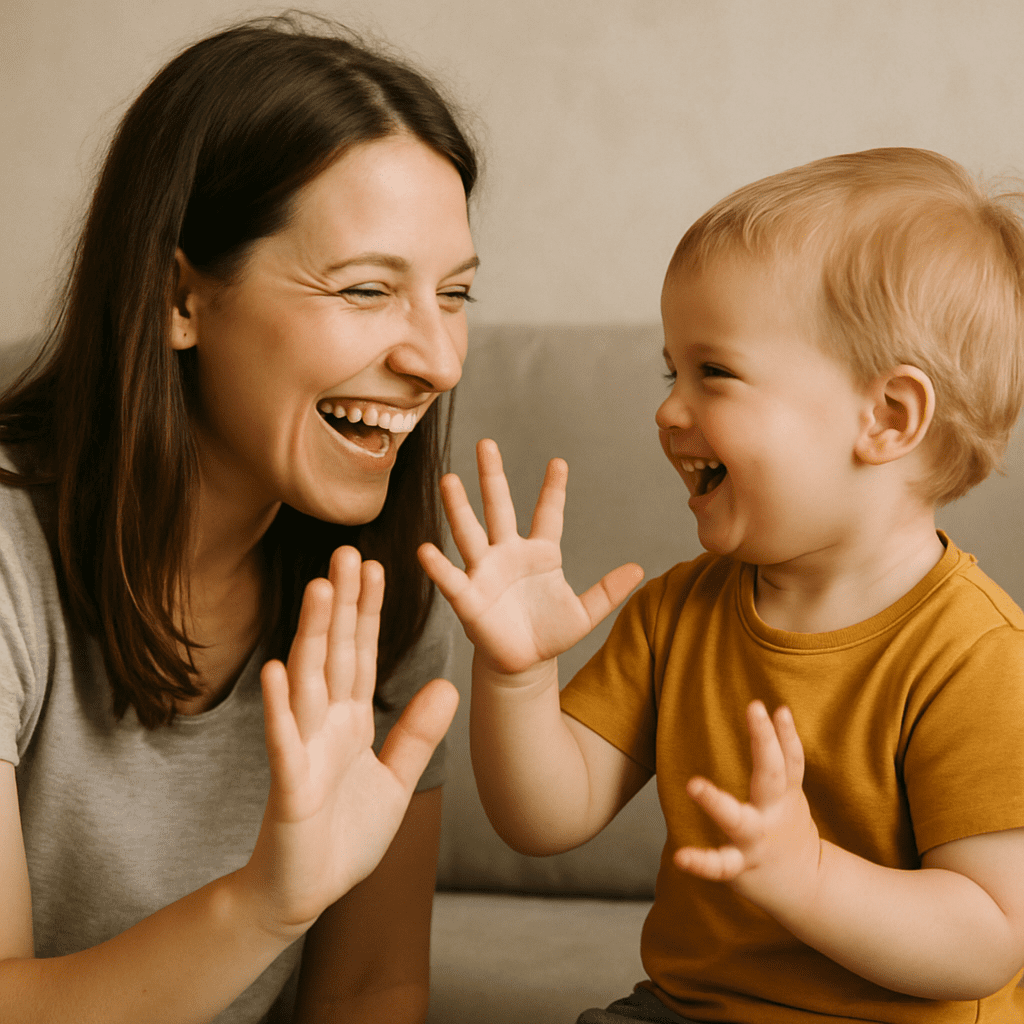
As long as words are not always enough to express complex thoughts, non-verbal communication remains extremely important. Communication through gestures and facial expressions This helps two-year-olds avoid frustration. Pointing at things, shaking their head, or shrugging their shoulders builds bridges when their active vocabulary is still limited.
This is how you can promote language development
To the Promote language development To be able to, you don't need expensive learning programs or flashcards. The best language school is your everyday family life.
The Power of Everyday Life and Parents
The Role model function of parents cannot be overestimated. Children learn language through imitation and social interaction. When you communicate with your child at eye level, speak clearly, and show genuine interest in what they want to tell you, you lay the most important foundation.
A Playful language promotion in everyday life is child's play to implement. Comment on your own actions: „I'm cutting the apple now. Would you like a piece of the red apple too?“ This way, children automatically associate objects and actions with the corresponding words.
Practical Tips and Exercises
Here are some best practices for naturally expanding your child's vocabulary:
- Use language games for 2-year-olds: Sing simple children's songs together, play finger games („This is the thumb...“), or play simplified versions of hide-and-seek games („Where is the teddy bear hiding?“). Melodies and rhythm help the brain to remember words better.
- Apply Corrective Feedback: Don't directly correct your child (don't say, „No, that's not “cuw„!“). When the child says, „Dai, a cuw!“, simply respond with confirmation using the correct word: "Yes, exactly! That's a cow."
- Using Books Effectively: Shared reading time is pure gold. There are great Dialogic reading tipsDon't just silently read the text from beginning to end. Actively involve your child. Ask open-ended questions („What is the bear doing on the tree?“), wait for the reaction, and expand on your child's answer („Exactly, the bear is climbing the tree because he's looking for honey.“).
When speech is delayed
Just as every child is unique, the pace at which they learn to speak also varies greatly. However, sometimes parents have legitimate concerns.
Recognize warning signs
There are certain Signs of speech and language delay, which warrant a closer look. If a child speaks fewer than 50 words on their second birthday and does not yet combine two words, they meet the official Criteria for Late Talkers (German for „late talkers“). Approximately 10 to 20 percent of all two-year-olds fall into this group. The good news: About half of these children catch up to their linguistic delays by their third birthday completely without outside help.
Nevertheless, you should remain vigilant, especially if you feel that your child's language comprehension is also limited, they don't react to noises, or they rarely make eye contact.
Medical support and assistance
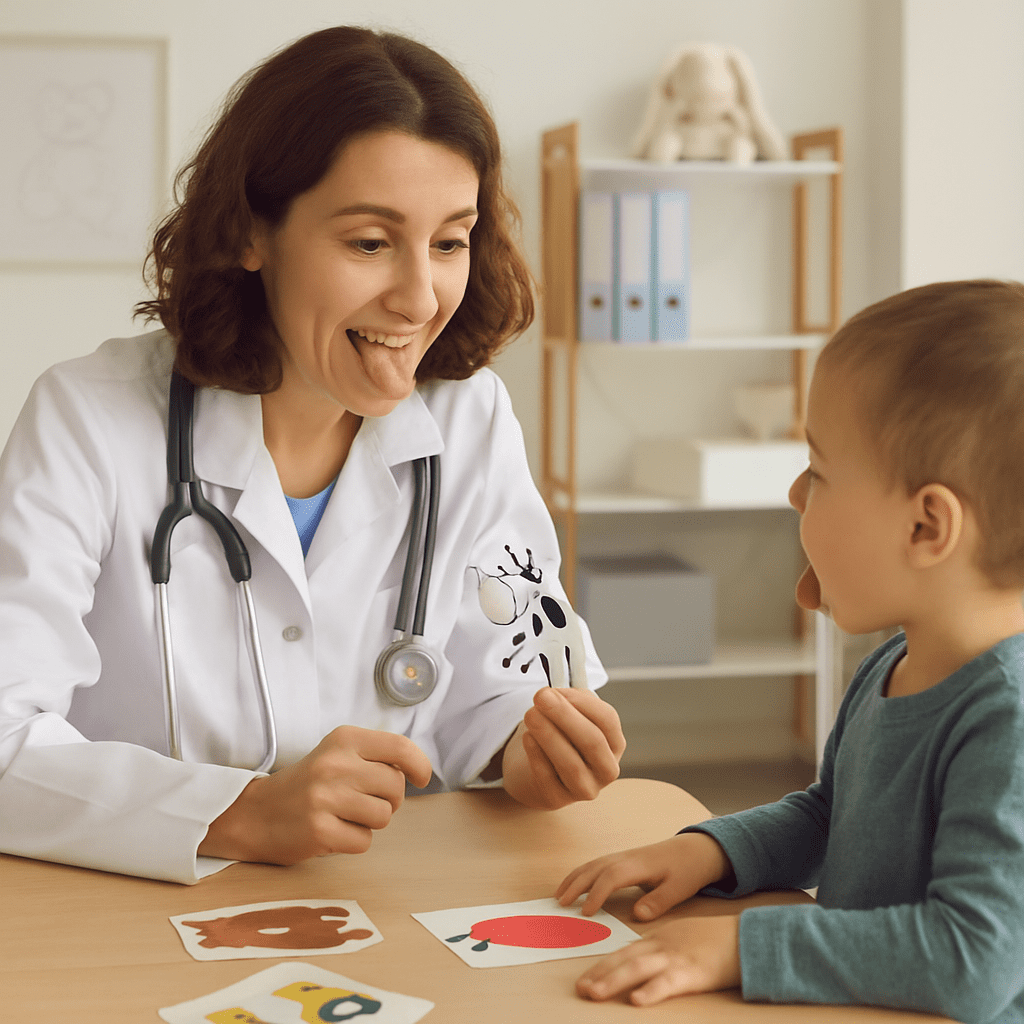
A crucial appointment is scheduled between the 21st and 24th month of life. Within the scope of the U7 Health Check Language Development, Checking motor skills and overall development is standard for a pediatrician. The child's active vocabulary is usually assessed using questionnaires. A very important aspect is also checking hearing – because those who cannot hear well cannot learn to speak properly. Oftentimes, simple fluid behind the eardrum (a middle ear effusion) is the cause of delayed speech development.
If the backlog doesn't resolve on its own, your pediatrician will advise you on the next steps. The question, when speech therapy is useful for toddlers, cannot be answered across the board. However, if the child visibly suffers from their limited expressive abilities (e.g., through severe temper tantrums), shows little language comprehension, or there is a family history of speech/language issues, playful speech therapy can work wonders even at around two and a half years of age.
Conclusion: Accompany relaxedly and give trust
The phase around a child's second birthday is marked by rapid changes. When you look at the typical milestones, it becomes clear what an enormous feat the child's brain accomplishes during this time. Accompany your child patiently, be a present language role model, and integrate language into your everyday life with joy and ease. Trust in your child's individual pace – and enjoy the many wonderful, fun, and amazing first conversations that now await you!