
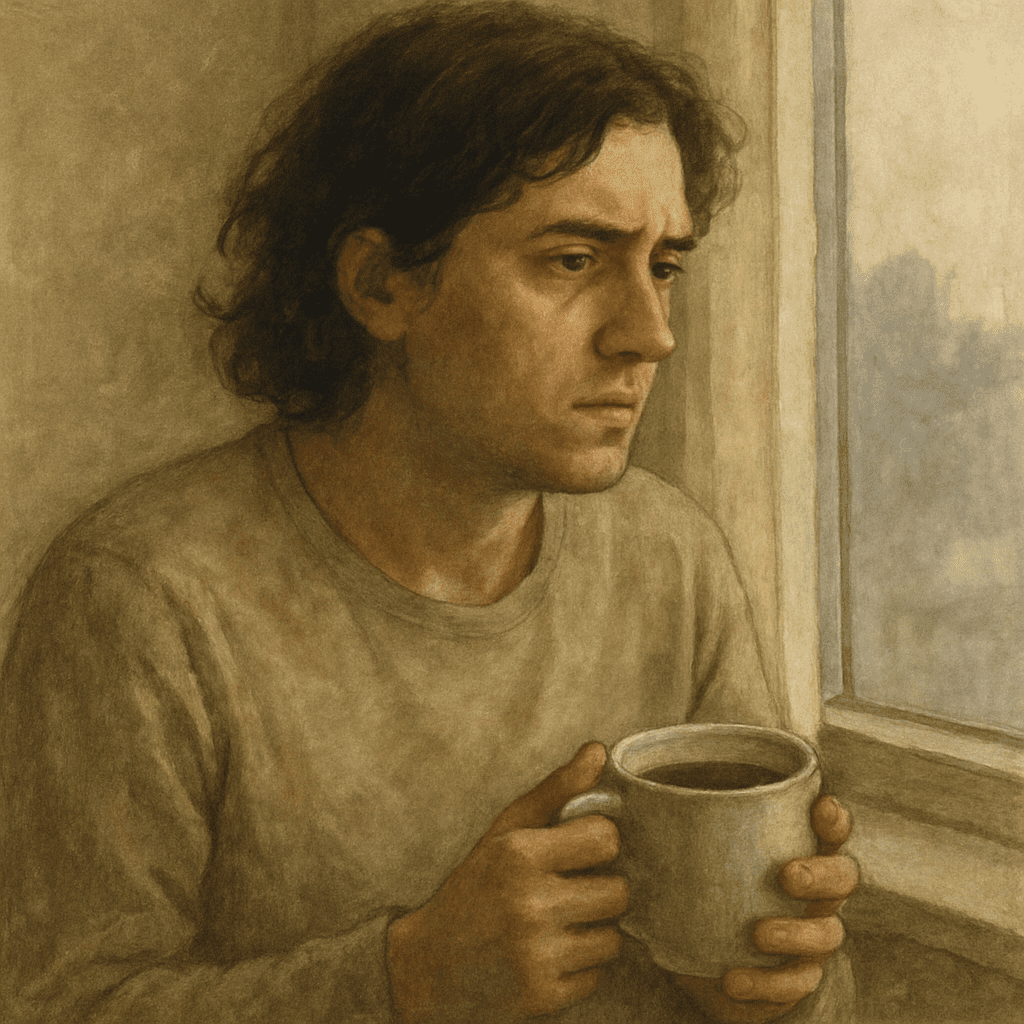
Do you know this feeling? You've actually finished work for the day, the tasks are done, and you could relax on the sofa. But instead of calming down, your heart starts beating faster. Your thoughts race, your legs bounce, and an inner voice whispers to you that you still need to get something done. You simply can't switch off.
Many people suffer from this chronic restlessness and blame themselves, their stressful jobs, or the modern lifestyle. But often the true cause lies much deeper in our past. To be precise: These childhood experiences can be behind constant restlessness.
In this article, we take a deep, in-depth look at the connection between early Childhood experiences and restlessness. We'll uncover why your body is stuck in alarm mode and provide you with practical, proven ways to finally give your nervous system the safety it's been longing for.
Why do I constantly feel driven and restless?
The question „Why do I constantly feel driven and restless?“countless adults. If this feeling is chronic, it is rarely just a time management problem. Rather, we are looking here at deep-seated Psychological causes for constant restlessness.
If we don't experience sufficient safety and security in our early years, our brain learns a fatal lesson: the world is unsafe, and relaxation is dangerous. When we relax, we lose control and become vulnerable. In this context, constant restlessness is not a weakness, but a brilliant survival mechanism of our body that once served to protect us from real or emotional dangers. The only problem is: our body never learned to turn off this alarm again.
How Childhood Stress Changes the Brain and Body
To understand inner restlessness, we must look to our biology. Childhood stress leaves not only emotional scars, but also changes the actual structure and functioning of our brain.
How early stress experiences shape the amygdala
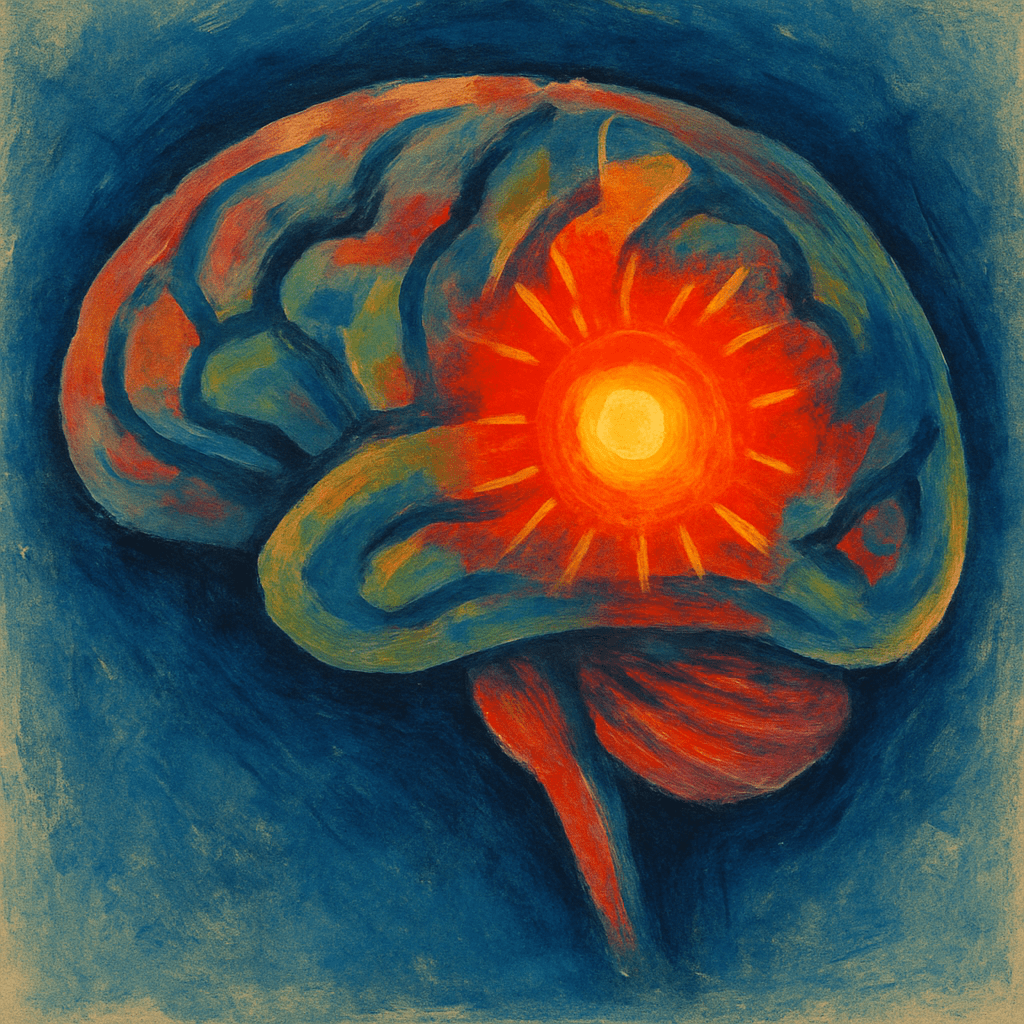
The amygdala is our brain's alarm system. It constantly scans our environment for threats. Science clearly shows, how early stress experiences shape the amygdalaIf a child experiences prolonged stress, the amygdala becomes overactive and physically enlarges. Simultaneously, the prefrontal cortex, responsible for logical thinking and calming the amygdala, is weakened. The result in adulthood is a brain that reacts with a massive stress response to even the smallest stimuli (like an unexpected email or a loud noise).
Symptoms of hypervigilance after a traumatic childhood
This overactivity of the brain leads to so-called hypervigilance – extreme watchfulness. Typical Symptoms of hypervigilance after a traumatic childhood are
- Constant scanning of the surroundings (Who is in the room? What is the mood?)
- Extreme jumpiness at sudden noises.
- The inability to sit with your back to the door.
- Chronic fatigue, as this state of wakefulness massively drains the body's energy.
- Sleep disorders because the brain doesn't give the „all clear“ signal even at night.
Specific childhood experiences as triggers
It doesn't always have to be classic abuse that leaves deep scars. Often, it's the subtler, chronic patterns in the family environment that program our nervous system for long-term stress.
Consequences of emotional neglect in adulthood
Emotional neglect doesn't mean there wasn't food or clothing at home. It means the child's emotional needs weren't seen or validated. Consequences of emotional neglect in adulthood often manifest in the deep core belief: „I am not enough as I am.“
To get love and attention, these children learn to „perform“ and achieve. The inner unrest arises because the adult unconsciously believes: If I stop being productive, I lose my value. Restlessness is the attempt to earn a right to exist through achievement.
Effects of unstable family relationships on the psyche
Children need reliability. Effects of unstable family relationships on the psyche – be it through parental addiction, constant arguments, financial anxieties, or a parent's mental illness – are immense. The child has to slip into a role for which it is not suited: it becomes the babysitter, the mediator, or the „adult“ in the house (parentification). This constant anticipation of problems burns itself into the nervous system as chronic restlessness.
Influence of insecure attachment patterns on stress perception
Our first significant relationships are our blueprint for all later relationships and for how secure we feel in the world. Influence of insecure attachment patterns on stress perception is tremendous. If a caregiver was unpredictable (sometimes loving, sometimes rejecting or explosive), the child develops an anxious-ambivalent attachment pattern. The nervous system is permanently on high alert: What's the mood today? Is there any danger? This chronic vigilance carries over into adulthood as constant, unexplained nervousness.
Hidden connections and misdiagnoses
Sometimes we feel the unrest physically, but can't attribute it to anything at all. The connections between our past and our present condition are often complex and require careful examination.
Childhood trauma and chronic nervousness
The Childhood trauma and chronic nervousness is long recognized in psychology. Trauma is not necessarily what happens to us happens is, but rather what is within us as a consequence of events happens. If overwhelming experiences cannot be processed, the body stores the excess fight-or-flight energy in the nervous system. Chronic nervousness is, so to speak, the running engine of a car with the accelerator fully depressed and the handbrake engaged simultaneously.

Physical signs of repressed childhood memories
The conscious mind often doesn't remember distressing situations, but the body never forgets. Among the most common Physical signs of repressed childhood memories belong
- Unexplained muscle tension (especially in the neck, jaw, and shoulder area).
- Gastrointestinal problems such as irritable bowel syndrome.
- Shallow, rapid breathing into the upper chest.
- Tremors or feelings of cold in situations that are completely harmless in themselves.
- Chronic headaches or migraines.
Difference between ADHD and early developmental trauma
A particularly important and often overlooked topic today is the Difference between ADHD and early developmental trauma. Many adults with chronic restlessness, concentration problems, and impulsivity are quickly diagnosed with ADHD.
Although the symptoms can be strikingly similar, the cause lies elsewhere: ADHD is largely assumed to have a neurobiological, often genetic component, involving deviations in the brain's dopamine metabolism. Early developmental trauma, on the other hand, leads to a permanently deregulated nervous system due to environmental factors (such as insecure attachment). A traumatized brain is unfocused because it is constantly on the lookout for danger. An accurate differential diagnosis by trauma therapists is crucial here to choose the right treatment approach.
Transgenerational transmission of traumatic stress
Sometimes the restlessness you feel doesn't even belong to you. Epigenetics explores the Transgenerational transmission of traumatic stress. If your parents or grandparents experienced trauma (like war, displacement, or profound loss), the resulting stress patterns can be imprinted on the genes and passed down to the next generation. You are born with a nervous system that is already more sensitive to stress. The realization, „This isn't really mine,“ can be extremely liberating for many affected individuals.
The Path to Peace: How We Can Break the Pattern
The good news is that our brain is neuroplastic. This means it can change, heal, and rewire itself well into old age. You are not helplessly at the mercy of your past.
Recognizing coping mechanisms for emotional instability
The first step to healing is awareness. We often numb our unease. It's important to acknowledge your own Coping mechanisms for emotional instability to recognize. How do you distract yourself when restlessness sets in?
- Workaholism (Constant work leaves no room for feeling).
- Perfectionism (The attempt to gain control through flawlessness).
- Doomscrolling on smartphones or binge-watching (digital numbness).
- Excessive sport, eating, or alcohol consumption.
Once you recognize these mechanisms for what they are – your system's coping strategies – you can begin to treat yourself with more kindness.
Healing the Inner Child with Restlessness
A central component of the therapy is Healing the Inner Child with Restlessness. The „inner child“ metaphorically represents the neural networks where our early experiences and emotions are stored. When unease rises within you, it's not the rational adult of today panicking, but the frightened child within you.
The practice of Re-Parenting (Parental role) helps here: If you feel driven, try to step back internally. Talk to yourself as you would to a frightened child: „I see you're feeling restless. You're safe now. I, the adult of today, am taking care of you. We don't have to achieve anything to be valuable right now.“ This conscious attention creates emotional security.

Strategies for Regulating an Overstimulated Nervous System
Working with the mind (top-down) is often not enough. We need to involve the body (bottom-up). Effective Strategies for Regulating an Overstimulated Nervous System focus on somatically (physically) signaling to the body that the danger has passed. This includes methods such as Somatic Experiencing or simple grounding techniques. A quick grounding exercise is the 5-4-3-2-1 method: Name 5 things you can see, 4 things you can touch, 3 things you can hear, 2 things you can smell, and 1 thing you can taste. This immediately brings the amygdala from the past into the safe here and now.
Exercises to calm the vagus nerve during tension
The vagus nerve is the most important nerve of our parasympathetic nervous system – the part responsible for „rest and digest.“ When we are stressed, this nerve is essentially deactivated. Here are specific Exercises to calm the vagus nerve during tension:
- Prolonged exhalation: Inhale through your nose for 4 seconds and exhale through your slightly open mouth (as if through a straw) for 8 seconds. The prolonged exhale is the most powerful biological switch to activate the vagus nerve.
- Humming and Singing: The vagus nerve runs through the larynx. Humming (like the „Om“ in yoga), deep toning, or loud singing directly stimulate the nerve through vibrations.
- Cold applications A splash of ice-cold water to the face or holding an ice cube activates the so-called diving reflex, which immediately slows the heart rate and cools the body.
- Gentle eye movements: Place your hands behind your head. Now, using only your eyes (without moving your head), look as far right as possible until you feel the need to yawn, swallow, or sigh (a sign of relaxation). Repeat this to the left side.
Conclusion: The Journey from Restlessness to Inner Security
The realization that These childhood experiences can be behind constant restlessness., is an eye-opener and a huge relief for many people at the same time. It means: There's nothing „wrong“ or „broken“ with you. Your body has simply reacted excellently to suboptimal conditions and learned to protect you through vigilance.
The way out of chronic restlessness is rarely a sprint, but a loving marathon. It's about regaining trust in your own safety, layer by layer. By recognizing old attachment patterns, differentiating from other diagnoses like ADHD, consciously working with your inner child, and above all, through daily small regulations of the nervous system, you can flip the switch.
Allow yourself to seek help, whether through body-oriented trauma therapy or trauma-sensitive coaching. You deserve not just to „function,“ but to enjoy life from a place of genuine, deep inner peace. Yesterday's danger is over – your body is allowed to learn to relax in the present.