
The initial period with a newborn is full of magical moments, cuddles, and countless firsts. But alongside all the joy, the postpartum period often brings physical challenges. One of the most common and painful hurdles for new mothers is breastfeeding. When it comes to, Treating sore nipples while breastfeeding to have to, women are looking for quick, gentle, and effective solutions. In midwifery practices and mothers' forums, a clear picture is currently emerging: Silver thimbles are all the rage: these are the disadvantages this trendy product can have, is often overlooked in the initial enthusiasm.
Although these small, metallic caps are praised as miracle cures, there are also critical aspects that every mother should know before buying. In this comprehensive guide, we will explore the topic in detail, compare alternatives, and provide you with the necessary knowledge to make an informed decision for your breastfeeding journey.
The Secret Behind the Hype: How Do Silver Nipple Shields Work?
Before we turn to the downsides, it's important to understand why this product became so popular in the first place. When one Silver thimble pros and cons When weighing the options, the fascinating properties of the material immediately catch the eye.
The effect is primarily based on two pillars:
- The antimicrobial effect of 925 sterling silver: Silver has been used for centuries in medicine to kill bacteria and fungi. Silver ions destroy bacteria cell walls, thereby inhibiting inflammation.
- Moist wound healing with breast shells: By placing a few drops of breast milk into the nipple shield and then onto the nipple, a moist, sterile environment is created. Cracks and injuries do not scab over, but rather heal smoothly from the inside out. Additionally, the nipple shield acts as a physical barrier against friction from a bra.
But where there is light, there is also shadow. Let's take a closer look at the potential pitfalls.
The Downsides: Silver Hats' Disadvantages in Detail
Despite their undeniable advantages, metallic caps are not a panacea. The Silver thimble disadvantages often only become apparent in practical everyday life. Here are the most important points to consider:
Mechanical pressure and risk of milk stasis
Many mothers wonder: Can silverette cups cause blocked milk ducts? The unfortunate answer is: Yes, under certain circumstances. If the shields are not optimally adapted to the individual breast shape or are pressed too hard against the breast by a tight nursing bra, the hard edges of the metal can cut deep into the soft breast tissue. This permanent pressure can compress delicate milk ducts, blocking milk flow, which in the worst case can lead to painful mastitis.
2. Safety concerns for the baby
Even though silver is natural, there are discussions about possible Risks of Silver Ions for Newborns. If the nipple shield rests on the breast, microscopic amounts of silver can transfer to the moisture (and thus to the skin and milk residue). Although silver nipple shields are generally considered safe, some toxicologists advise caution, as the long-term effects of oral intake of silver particles by infants have not yet been definitively clarified. Therefore, some experts recommend gently wiping the breast with a clean cloth before feeding.
3. Challenges with hygiene and odor formation
Beneath the airtight silver cap, breast milk, sweat, and sebum accumulate. If you're not meticulous about cleaning, this can have unpleasant consequences. Those who are Preventing odor formation in silver pacifiers must be cleaned and emptied very regularly. A rancid milk smell is not only unpleasant for the mother, but can also irritate the baby at the breast.
4. The financial aspect
Another criticism is that Silver cap cost-benefit ratio. Compared to creams or disposable pads, high-quality silver nipple shields are relatively expensive to purchase (often between 30 and 60 Euros). It is also important to Recognizing the quality of silver thimbles to be able to. Inexpensive imitations from the internet sometimes contain nickel or other alloys that can trigger severe contact allergies. Be sure to look for a certificate for medical 925 or 999 silver.

Proper Handling: How to Prevent Problems
To minimize the disadvantages, correct application is paramount. Whoever Silver nursing shells: correct application One should follow some basic rules.
- Choosing the right size: Ensure the rim of the condom does not cut into the areola. Many manufacturers offer different sizes (e.g., Regular and XL).
- Take breaks The Duration of silverETTE usage between feedings should not be 24 hours a day. The skin also needs fresh air to stay resilient. Take the hats off in between and let air to your chest.
- No additional creams: Do not use lanolin ointment or other creams under the silver cap. These can block the effectiveness of the silver and attack the material.
How to hygienically clean silver thimbles?
The care of the cones is simple, but must be carried out consistently to stop bacterial growth:
- Daily Basic Cleaning: Wash the caps at least once daily with lukewarm water and a mild, unscented soap.
- Baking soda paste for tarnish: Silver oxidizes over time and turns dark. Mix some water with baking soda to make a paste and gently rub the caps with it. Rinse thoroughly afterward.
- Drying Always dry the caps with a soft, lint-free cloth before reattaching them.
- Disinfection (optional): Unlike pacifiers, silver teats should generally not be boiled, as extreme heat (especially with very thin material) can cause them to warp. Instead, rely on their natural antibacterial properties in combination with mild soap.
Comparison and Solutions: Silver Nipple Shields vs. Hydrogel Pads
Silver caps aren't the best choice for every breast and every type of injury. Especially if there is already a bacterial infection or a deep, bleeding tear, it's worth exploring other options on the market.
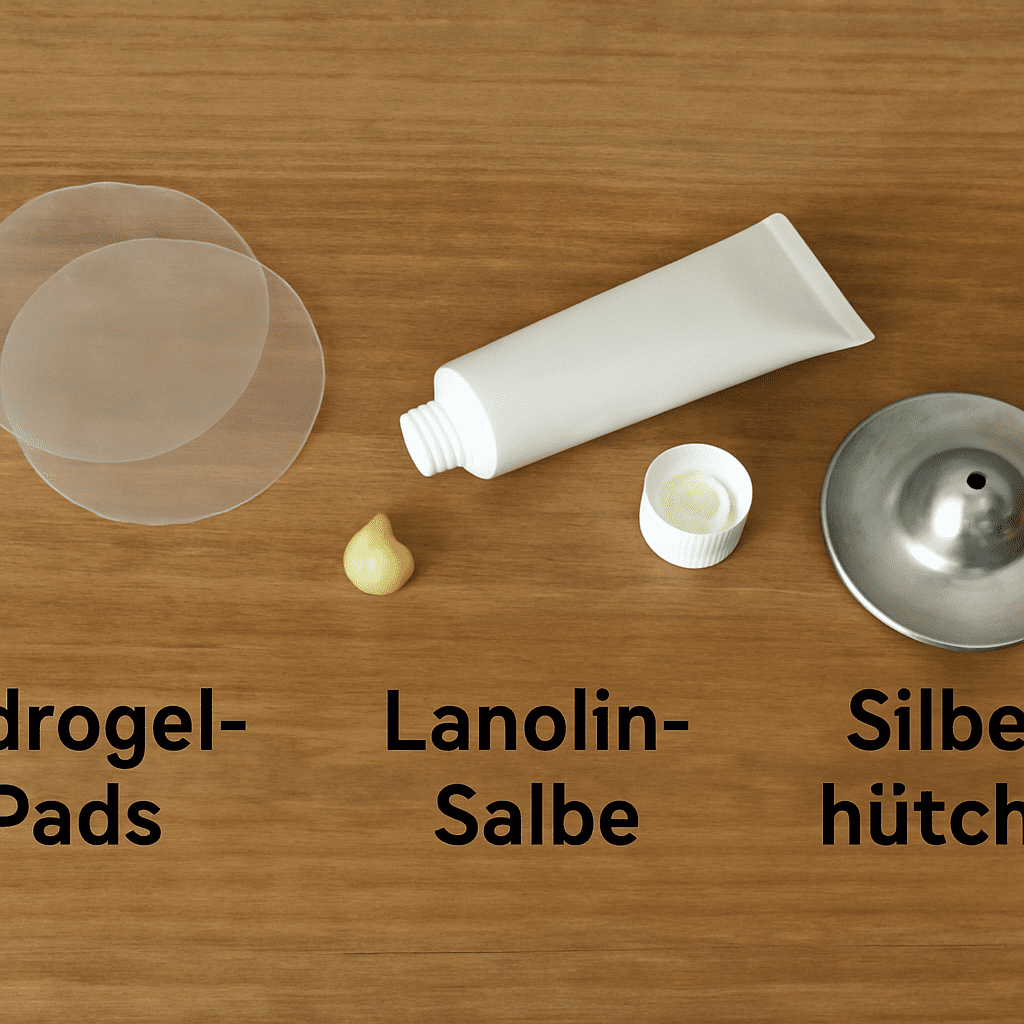
A very popular comparison is Silver Thimbles vs. Hydrogel Pads. Hydrogel pads offer an immediate, wonderfully cooling effect that is often perceived as great relief for acutely burning nipples. They also promote the principle of moist wound healing and cushion the nipple softly – without any hard edges, which minimizes the risk of milk stasis. The disadvantage of gel pads, however, lies in their sustainability and price: they must be disposed of after a few days and repurchased, which becomes expensive in the long run. Silver nipple shields, on the other hand, are a one-time investment that can even be kept for future children.
Further alternatives to silver nipple shields for skin irritation
If you notice the silver feels tight or causes discomfort on your skin, there are excellent Alternatives to silver nipple shields for skin irritation:
- Wool grease (Lanolin): The classic among skincare products. It moisturizes rough patches and does not need to be washed off before breastfeeding.
- Black tea bags Cooled, moist black tea bags on the nipple have a strong astringent (contracting) and anti-inflammatory effect due to the contained tannins.
- Breast Donuts (Ring Cushions): You can make these yourself using gauze bandages. They keep clothing away from the nipple but allow 100% airflow to the skin.
Expert Advice: Midwife Tips for Sore Nipples
It is often forgotten that aids like silver nipple shields only combat the symptoms and do not fix the cause. Valuable Midwife tips for sore nipples always start with breastfeeding management first.
The most common cause of cracked nipples is a baby latching on asymmetrically or too shallowly. If the baby doesn't have enough breast tissue in its mouth, the sensitive nipple rubs against the baby's hard palate. Be sure to have your latch technique checked by a midwife or an International Board Certified Lactation Consultant (IBCLC).
Equally important is the Prevention of mastitis during breastfeeding (mastitis). This often occurs when the breast is not properly emptied—whether due to poor latching, a tight frenulum in the baby, or external mechanical pressure (such as from ill-fitting nipple shields or bras that are too tight). Choose soft, wireless nursing bras, change nursing positions regularly (e.g., cradle hold, football hold, lying down) so that all areas of the breast are emptied evenly, and address any hard spots immediately by applying warmth before breastfeeding and gently massaging them.
Conclusion: Are the little silver helpers worth it?
There is no question that the metallic caps can help many mothers get through the first difficult weeks of breastfeeding. The combination of physical protection, a moist wound healing environment, and antimicrobial effect is unique.
Nevertheless, the fact remains: just because Silver thimbles are all the rage: these are the disadvantages this trendy product can have – and these should not be ignored. From potential pressure points to hygiene requirements to the relatively high initial costs, they require conscious handling. Those who pay attention to a very good fit, take breaks from wearing them, and always rely on the highest material quality can make optimal use of the advantages.
But never forget: even the best tools can’t replace good breastfeeding support. If the pain persists or gets worse, seeing a midwife or lactation consultant is always the most important and safest step on your breastfeeding journey.